Noto

Landscapes

The old town, Noto Antica, lies 8 kilometres (5 mi) directly north on Mount Alveria. A city of Sicel origin, it was known as Netum in ancient times. In 263 BCE the city was granted to Hiero II by the Romans. According to legend, Daedalus stayed in the city after his flight over the Ionian Sea, as did Hercules after his seventh task. During the Roman era, it opposed the magistrate Verres.

In 866 it was conquered by the Muslims, who elevated the city to become a capital of one of the three districts of the island (the Val di Noto). In 1091, it became the last Islamic stronghold in Sicily to fall to the Christians. Later it became a rich Norman city.

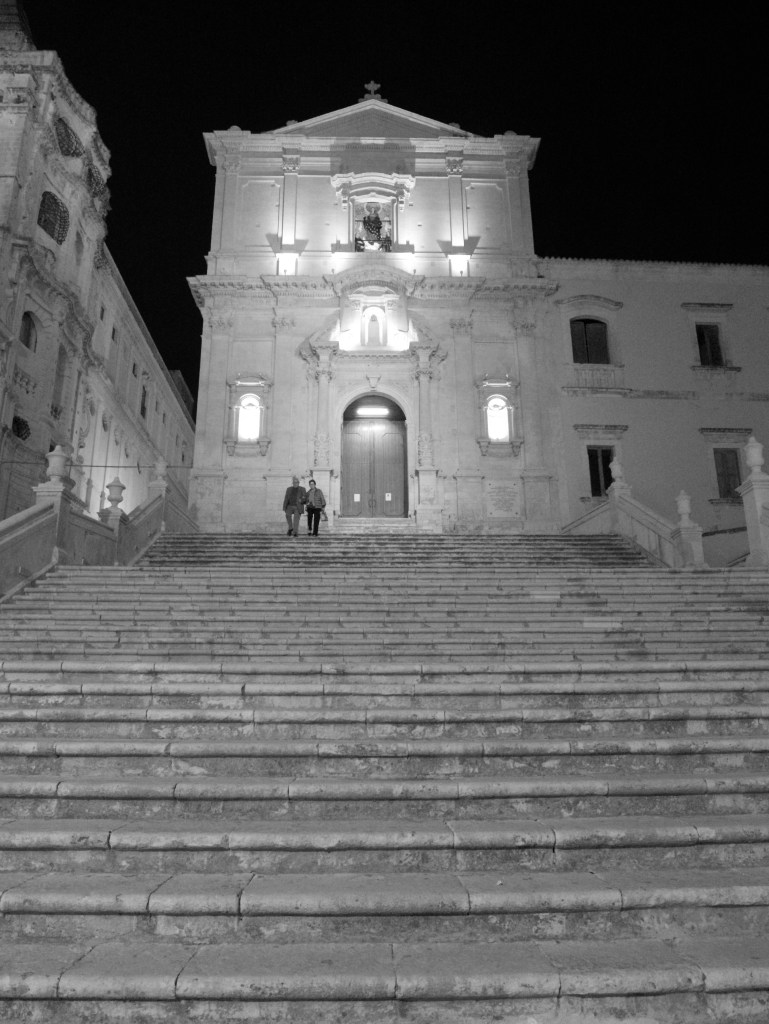
Noto 2018

In the 16th and 17th centuries, the city was home to several notable intellectual figures, including Giovanni Aurispa, jurists Andrea Barbazio and Antonio Corsetto, as well as architect Matteo Carnelivari and composer Mario Capuana. In 1503 king Ferdinand III granted it the title of civitas ingeniosa (“Ingenious City”). In the following centuries, the city expanded, growing beyond its medieval limits, and new buildings, churches and convents were built.

The medieval town of Noto was virtually razed by the 1693 Sicilian earthquake. Over half the population is said to have died from the earthquake. It was decided to re-build the town at the present site, on the left bank of the River Asinaro, closer to the Ionian shore. These circumstances have led this town to have a unique architectural homogeneity, since the core of the town was all built over the next decades after the calamity in what is a typical and highly preserved example of Sicilian baroque. The layout followed a grid system by Giovanni Battista Landolina and utilized the sloping hillside for scenographic effects. The architects Rosario Gagliardi, Francesco Sortino and others each participated in designing multiple structures. The town was dubbed the “Stone Garden” by Cesare Brandi and is currently listed among UNESCO’s World Heritage Sites. Many of the newer structures are built of a soft tufa stone, which assume a honey tonality under sunlight. Parts of the cathedral, however, unexpectedly collapsed in 1996.

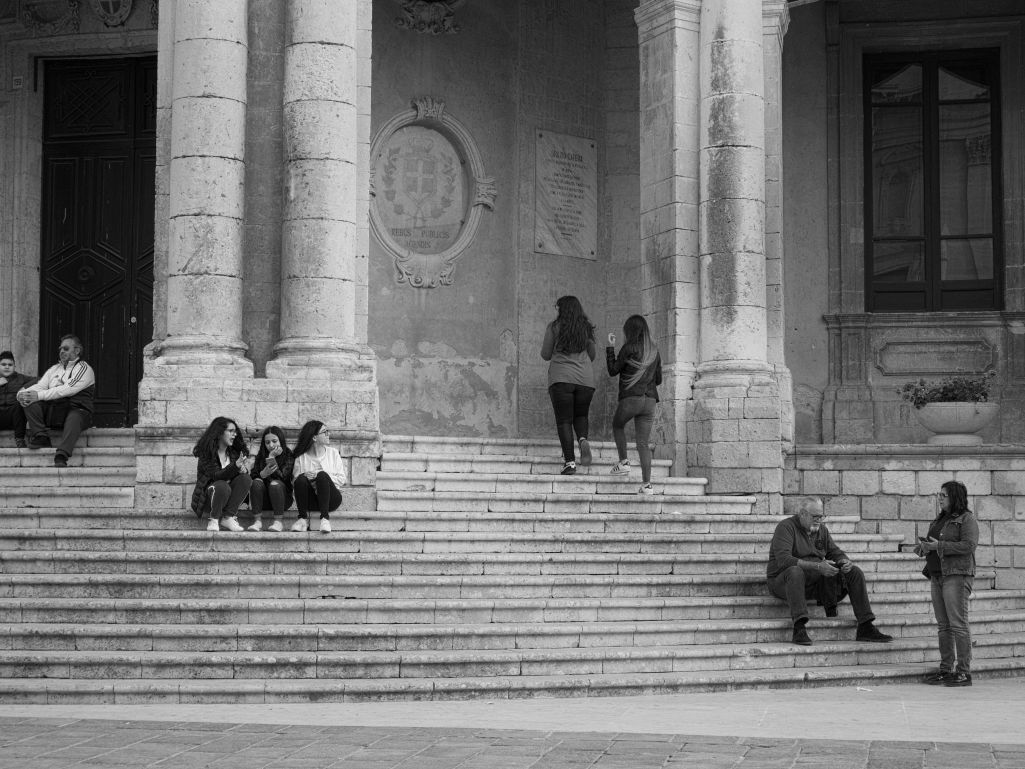
Noto 2018

The city, which had lost its provincial capital status in 1817, rebelled against the House of Bourbon on 16 May 1860, leaving its gates open to Giuseppe Garibaldi and his expedition. Five months later, on 21 October, a plebiscite sealed the annexation of Noto to Piedmont.

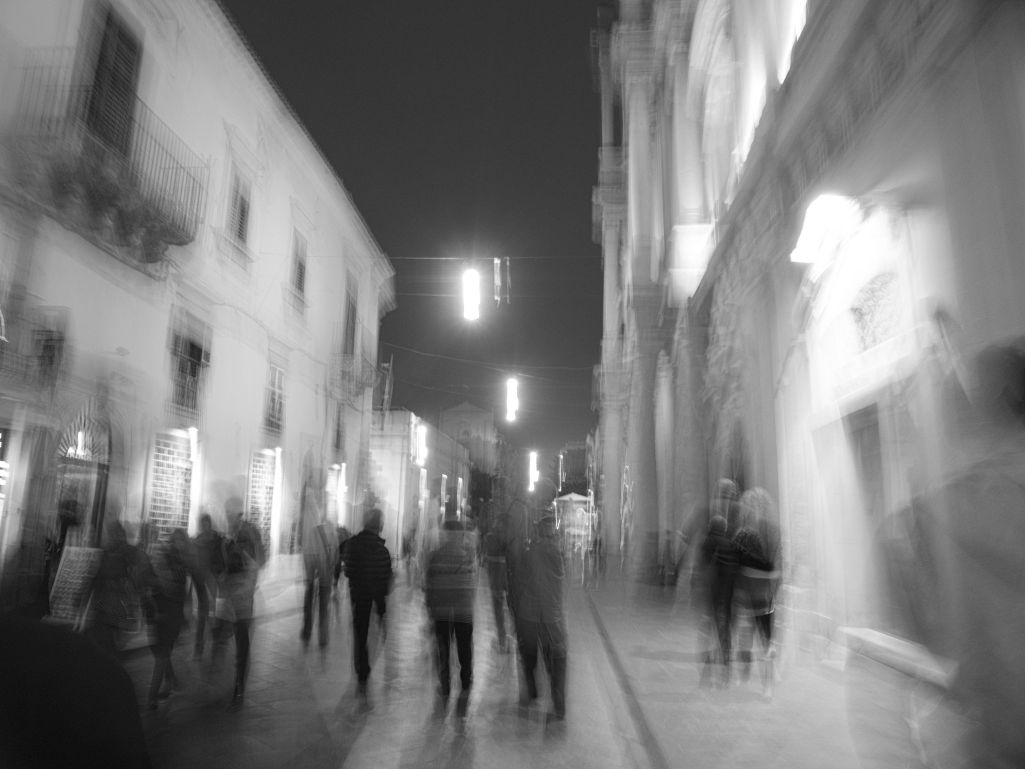
Noto 2018

Vendicari, Sicilia

Landscapes
Floating, Vendicari 2018
Vindicari, Sicily
Tree and house, Vindicari 2018

At least one photo a day

Tonnara siciliana

Landscapes

Tonnara is the Italian word for the tuna factories where fishermen used to bring and process their tuna catches.

Tonnara, Sicilia 2018

At least one photo a day

Po river /6

Landscapes
The Po river, Cremona 2017

Po river /5

Landscapes
The Po river near Cremona
Po river, Cremona 2017

At least one photo a day

Po river /4

Landscapes
The Po river near Cremona
Return, Cremona 2017

At least one photo a day

Po river /3

Landscapes
Treeline on the opposite shore of the Po river
Opposite shore, Cremona 2017
Treeline on the opposite shore of the Po river
Opposite shore, Cremona 2017
Treeline on the opposite shore of the Po river
Opposite shore, Cremona 2017

At least one photo a day

Po river /2

Landscapes
Small boat on the Po river
Approaching boat, Cremona 2017
Small boat on the Po river
Approaching boat, Cremona 2017

At least one photo a day

Po River /1

Landscapes
Autumn on the Po river
Po river, Cremona 2017
Autumn on the Po river
Po river, Cremona 2017

At least one photo a day
The middle of the summer

Landscapes

It is summer—night time. The air is humid. It is warm. I cycle downtown. I try not to hurry too much, but I am a bit nervous. I turn left in Via Mercatello. I see the lights on at the bar at the corner. I recognise some people who stand on the sidewalk in front with a glass in their hands. I reach the end of the road, turn right and see the back of the cathedral. I get to the main square and slow down but do not stop. I make large loops on the cobblestones of the piazza. Then another one. I stop in front of the Bertazzola. One foot on the ground. The other is on the pedal. I see people standing outside the bar under the arches of the municipality. Young couples sit on the steps of the Cathedral not far from me. They whisper to each other. I feel the heat of the day which was trapped in the stones of the piazza and is now freeing itself. This is the middle of the summer.

Portal early 12th century, Cremona 2018

At least one photo a day