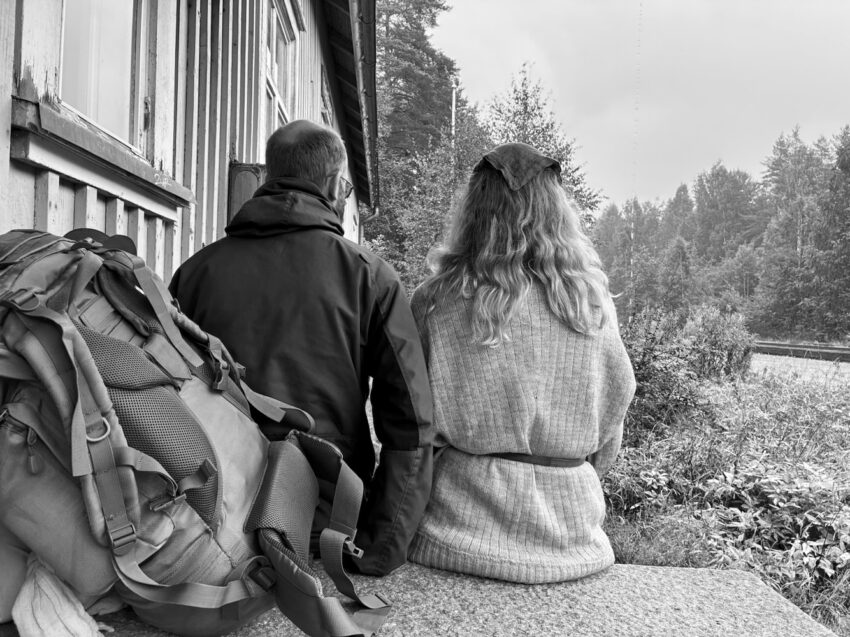
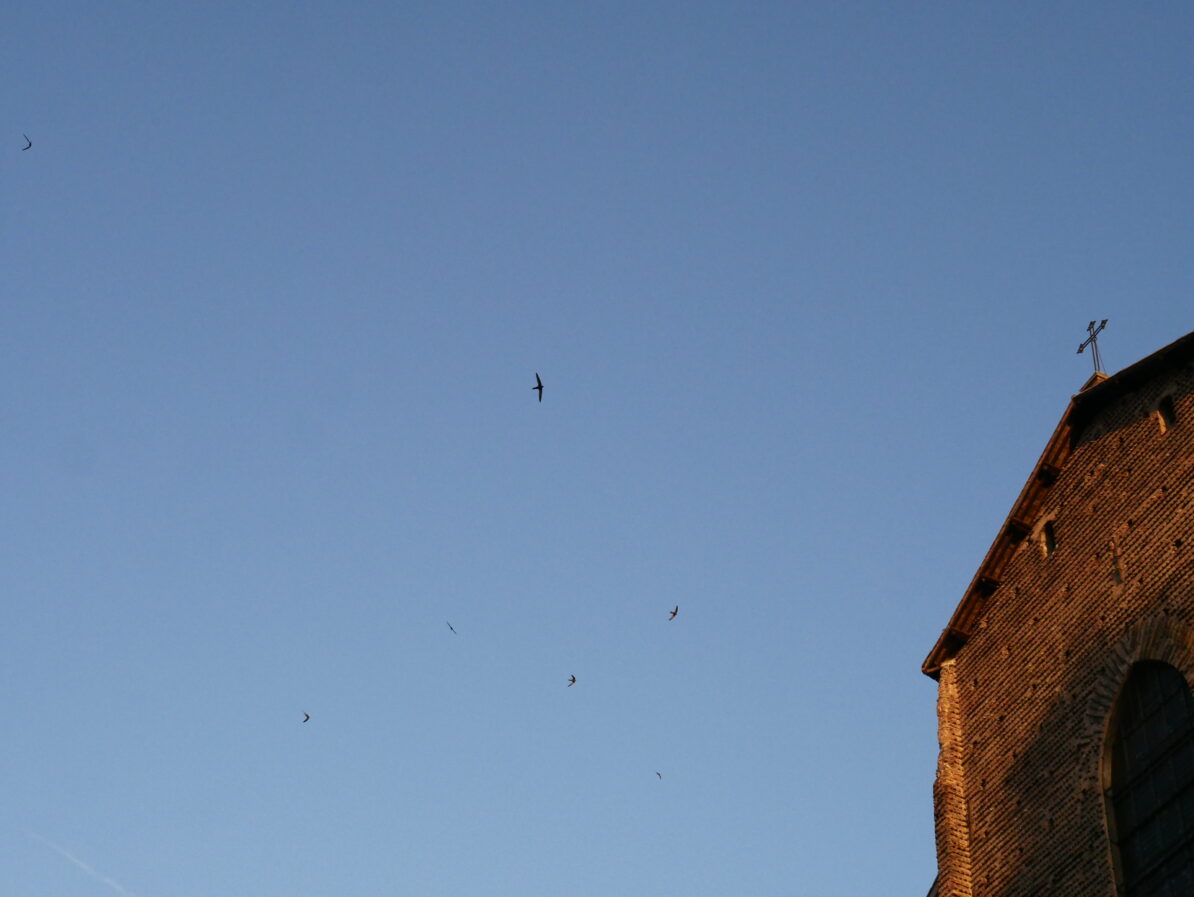
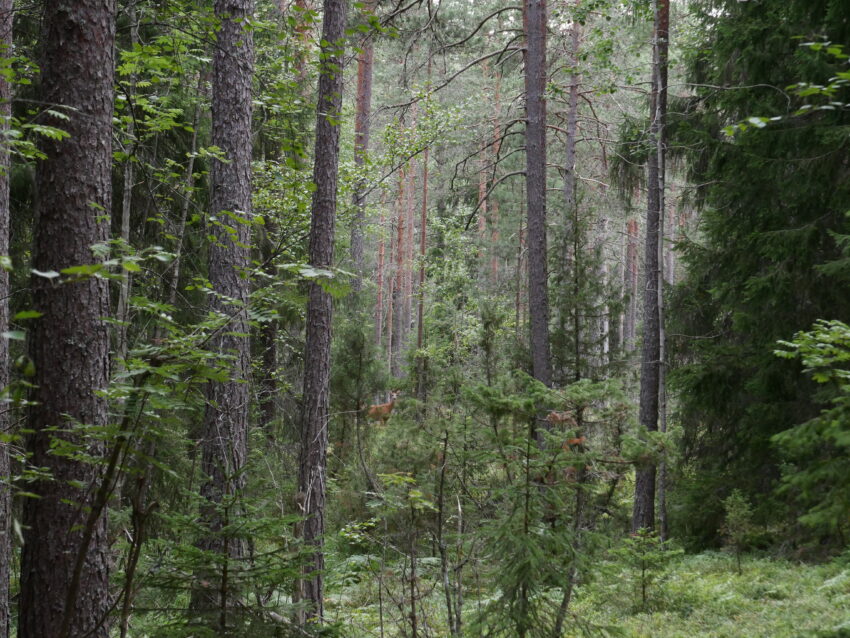
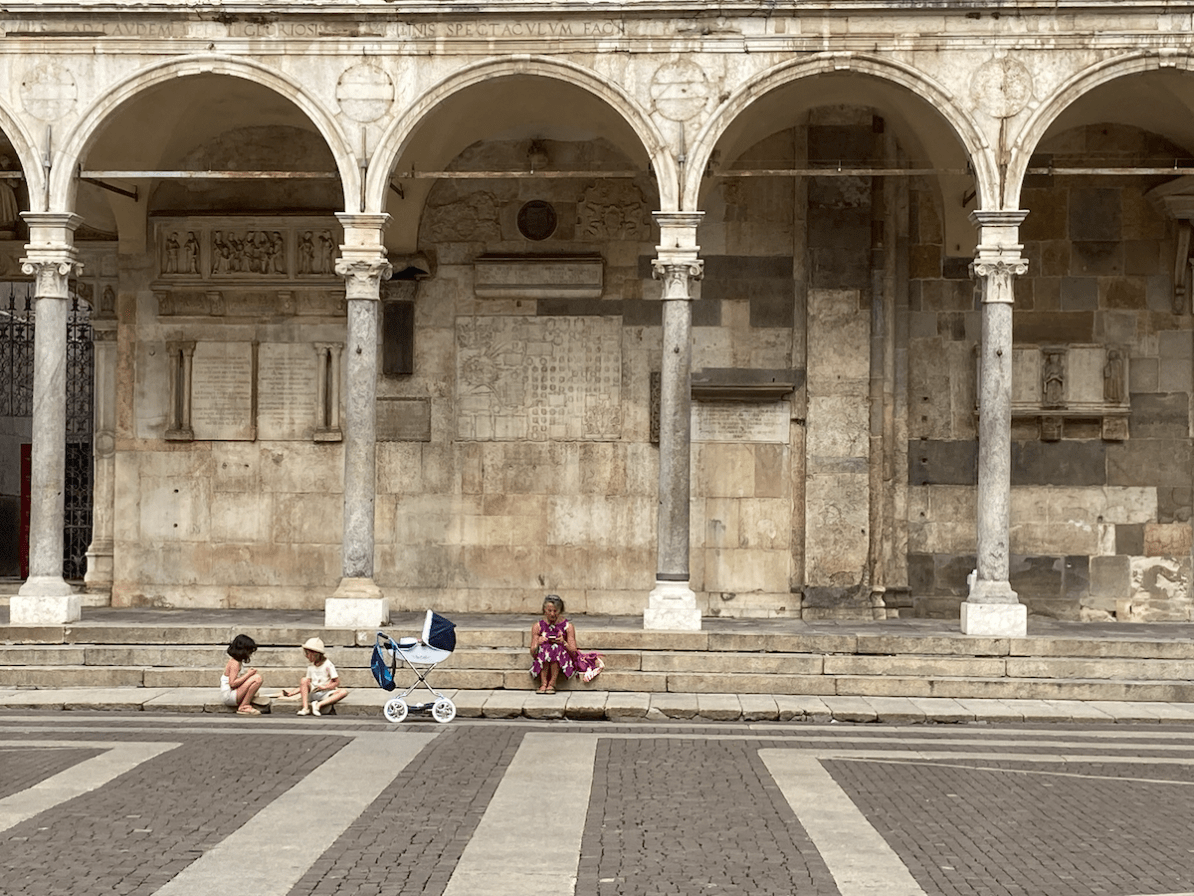
This happened on 21. October. Here is what I noticed during the Lab
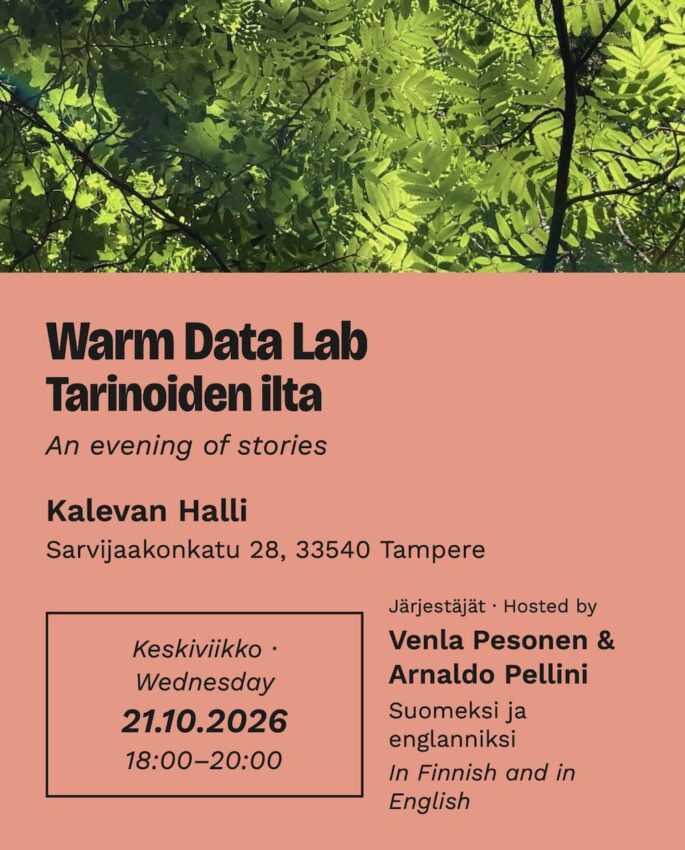
Warm Data Lab — ilta tarinoiden äärellä Kalevan Halli, Sarvijaakonkatu 28
21.10.2026 klo 18–20
Tule mukaan rentoon keskusteluiltaan.
Venla Pesonen ja Arnaldo Pellini järjestävät Kalevan Hallissa Warm Data Labin — tilan, jossa voit pysähtyä ja kohdata toisia läsnäolon ja omasta elämästä kumpuavien tarinoiden kautta.
Aloitamme kahvilla, teellä ja vapaalla seurustelulla, josta siirrymme keskustelujen äärelle.
Iltaan ei tarvitse erityisemmin valmistautua, tervetuloa sellaisena kuin olet. Samaan aikaan on käynnissä useita pieniä keskustelupiirejä, ja voit siirtyä niiden välillä vapaasti uteliaisuutesi johdattamana — kuunnellen, tarinoita jakaen ja kertoen sen, mitä mieleesi tulee. Illan aikana emme pyri ratkaisemaan mitään tai löytämään yhteistä konsensusta vaan tutkimme yhdessä, kokemuksia jakaen, millaista on elää tässä monitahoisessa muuttuvassa maailmassa.
Suomeksi ja englanniksi, itsellesi parhaiten sopivalla kielellä. Tarjolla kahvia, teetä ja pientä purtavaa. Maksuton.
Ilmoitathan osallistumisestasi 20.10. mennessä sähköpostitse: arnaldo.pellini@capability.fi — ennakkotieto osallistujamäärästä auttaa meitä järjestelemään tilan.
Warm Data Lab -menetelmän ovat kehittäneet Nora Bateson ja International Bateson Institute. Lisätietoja: www.warmdata.life
Tapahtuma järjestetään yhteistyössä Kalevan klubin kanssa ja voit halutessasi tulla paikalle jo klo 17 alkaen. Kalevan Klubi on kaikille avoin aikuisten kohtaamispaikka, joka kokoontuu keskiviikkoisin klo 17-19.30 Kalevan Hallilla. Klibilla lauletaan karaokea, pelaillaan lautapelejä, heitellään dartsia, höpötellään ja kehitellään mukavaa yhteistä tekemistä.
……………………………………….
Warm Data Lab — an evening of stories Kalevan Halli, Sarvijaakonkatu 28
21 October 2026, 18:00–20:00
Join us for a relaxed evening of stories and conversations.
Venla Pesonen and Arnaldo Pellini host a Warm Data Lab at Kalevan Halli — a space to slow down and meet one another through stories from our own lives.
We start with coffee, tea and a chance to say hello, and then transition into conversations.
There is nothing to prepare — just come as you are, with a curiosity to connect. Several small conversations will take place at the same time, and you can move between them whenever your curiosity takes you — listening, sharing stories, saying what comes to mind. There is nothing to solve and no conclusion to reach. Just exploring together what it is like to live in this changing world.
In Finnish and in English, using the language that feels most comfortable to you. Coffee, tea and some snacks will be served. Free entry.
Let us know by 20. October if you’d like to come —knowing the number of participants helps us set up the space. Email: arnaldo.pellini@capability.fi
Warm Data Labs were developed by Nora Bateson and the International Bateson Institute. More info: www.warmdata.life
The event is organized jointly with Kalevan klubi – open meeting place and community for adults to get together for social activities every Wednesday at 17-19.30 at Kalevan halli .
I am back in Jakarta this week for work—moving between meetings in taxis, on public transport, and on foot. Having lived here for four years nearly a decade ago, and coming back regularly ever since, it is nice to come back to a familiar place.
The city is constantly moving. Looking at the streets, through the tree branches, and down at the kaki lima (street vendors) along the sidewalks, I think about the complexity of the interconnected contexts that shape daily life in this mega city.
Kaki lima – Street vendors / Jakarta, Indonesia / 2026
[As usual the English version is at the end of this post]
Ho visitato Trieste lo scorso luglio per un paio di giorni. Era da tanto che volevo andarci. Per qualche motivo mi ha sempre affascinato. Quando vivevo a Cremona mi è sempre sembrata una città lontana, di confine, difficile da raggiungere. Ovviamente non lo è e penso che a volte ci siano motivi inconsci che ci portano a vedere le distanze più dilatate di quanto lo siano.
Una breve premessa. Questo blog è parte del mio modo di digerire i contenuti del corso su Warm Data con Nora Bateson al quale ho partecipato all’inizio di agosto. Come ho scritto in un altro blog sono tornato a casa con una manciata di concetti che mi girano ancora in testa: il doppio vincolo (double bind), l’informazione come “differenza che fa la differenza”, la distinzione tra cambiare una struttura e cambiare un sistema, e altri ancora. Non ho risposte definitive e non pretendo di aver capito tutto. Ho scoperto però che scrivere dei post come questo mi aiuta a legare quelle idee a momenti che ho vissuto — come una giornata di luglio a Trieste e un pranzo in un’osteria sociale un po’ fuori mano — e quindi a capire meglio. Questo post è quindi un ‘esercizio di collegamento’, non una spiegazione.
Dunque. Lo scorso luglio ero a Trieste. Mi muovevo in città con l’aiuto di un paio di articoli del Guardian che consigliavano alcuni locali e vinerie più o meno conosciuti. Quindi seguivo una mappa gastronomica per orientarmi in città.
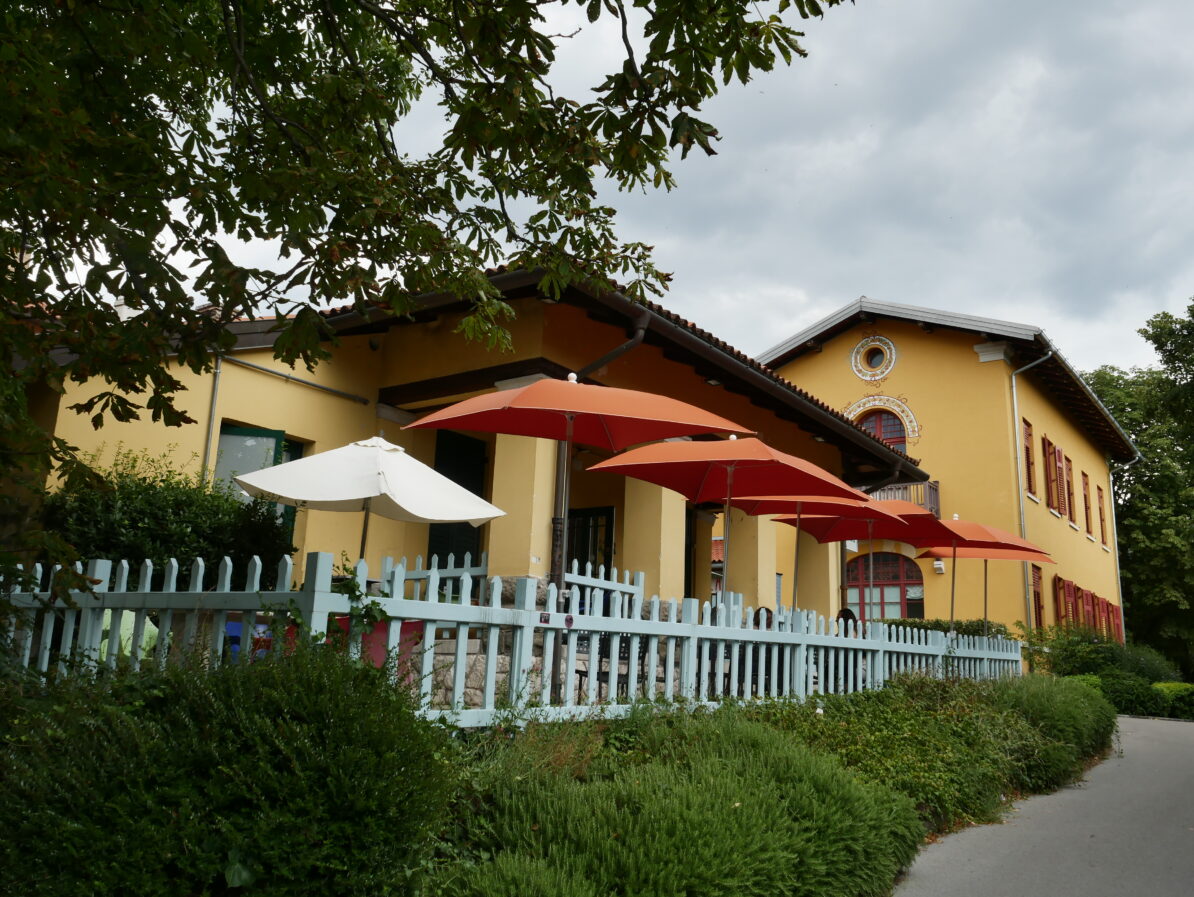
È in uno di questi articoli che ho letto dell’osteria sociale Il Posto delle Fragole. L’articolo lo descriveva come uno dei simboli di libertà di Trieste. Un bar ristorante e centro culturale dentro il parco dell’ex ospedale psichiatrico, sulle colline sopra la città. Quella parola, libertà, mi ha colpito, oltre che al nome e il ricordo del film di Ingmar Bergman. Ricordo la foto che accompagnava l’articolo: un locale piccolo, i muri di un colore giallo ocra, una piccola staccionata di legno, tavoli all’aperto e l’atmosfera di una sera d’estate. L’articolo suggeriva di prendere l’autobus per raggiungerlo, dato che si trova sulle colline dietro Trieste, oltre l’università.
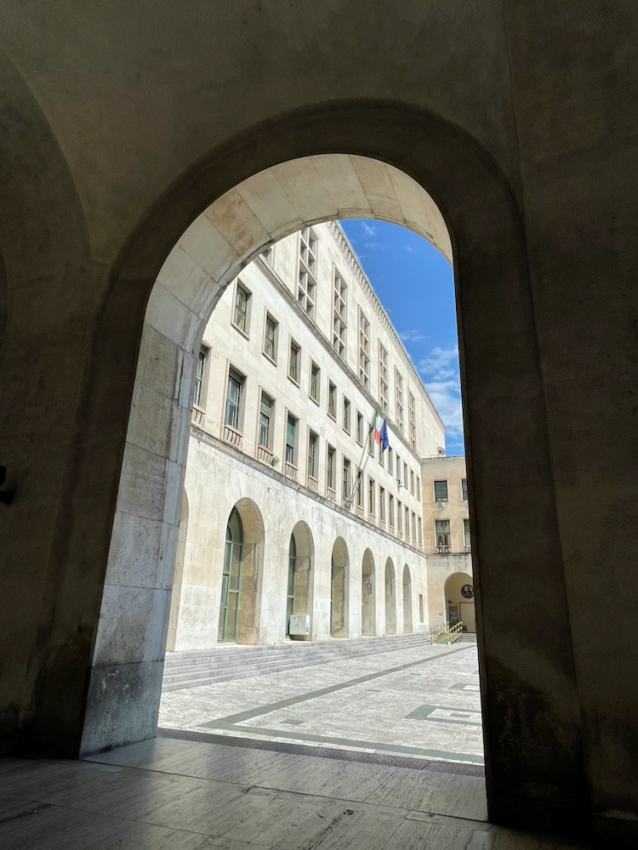
L’autobus dal centro si è arrampicato tra condomini anni ’70. È passato davanti all’università, un edificio massiccio di epoca fascista che domina con lo sguardo tutta la città fino al mare. Poi i condomini sono finiti, lasciando il posto a casette unifamiliari, a pini marittimi, al verde delle colline.
Università / Trieste, Italy / 2026
Sono arrivato alla mia fermata e per un attimo mi sono pentito: mi sono sentito lontano dalla città e ho pensato che da lì sicuramente passasse solo un bus ogni mezz’ora o quaranta minuti. Era quasi l’ora di pranzo e faceva molto caldo. Le cicale erano assordanti e non c’era segno del locale. Vedevo solo una specie di arco d’ingresso al parco con un cartello: Parco di San Giovanni.
Ho controllato su Google Maps, ma non riuscivo a capire se Il Posto delle Fragole fosse a pochi passi o distante. Comunque, la direzione giusta era in discesa. Ho seguito un sentiero che attraversava un giardino di rose molto colorate, come se fossero indifferenti al calore intenso e secco del primo pomeriggio. Sono passato di fronte al Museo Nazionale dell’Antartide, che sembrava fuori posto dato il caldo e la stagione.
Dopo pochi minuti ho raggiunto Il Posto delle Fragole. Appena sono entrato mi sono sentito subito a mio agio. Le grandi finestre aperte sul porticato, l’aria calda dell’esterno che scivolava sui tavoli, il bancone del bar dietro al quale quattro o cinque ragazzi e ragazze si davano un gran da fare. L’ora del pranzo anche per chi lavora negli edifici del parco. Il soffitto alto, con travi a vista, e i tavoli in legno chiaro. Il coperto semplice: un sottopiatto di carta, un cestino di pane, le posate, e un menù con quattro o cinque piatti del giorno.
Mi sono guardato attorno. Gli altri avventori erano una tavolata con otto o nove persone, sembravano colleghi, un uomo anziano che pranzava con una ragazza con le braccia completamente tatuate, e un tavolo con tre muratori.
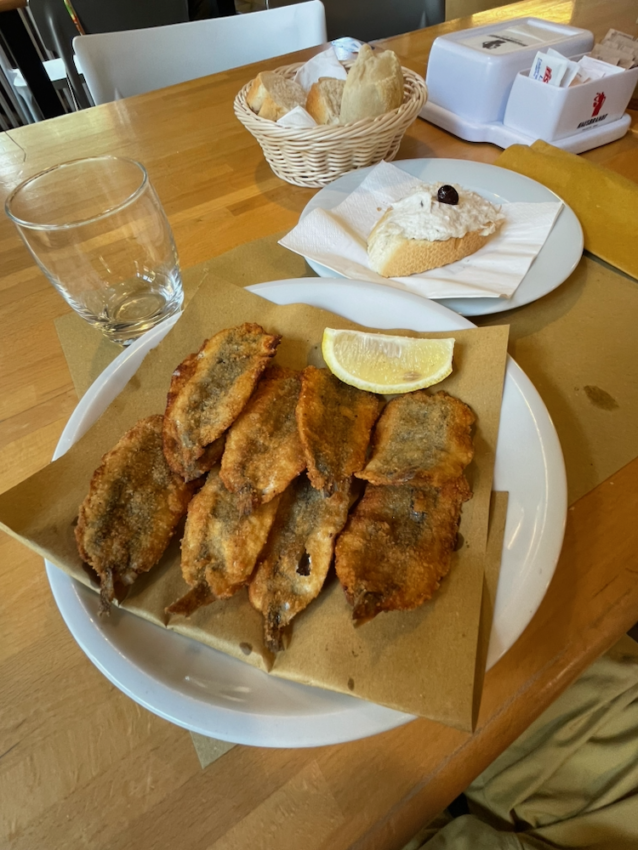
Dopo aver ordinato delle alici impanate (buonissime!) e una tartina di pesce ho pensato che ero proprio contento di essere venuto fin lassù.
Alici impanate / Trieste, Italy / 2026
La scoperta del luogo con Franco Basaglia
Mentre raggiungevo il ristorante avevo notato dei cartelli che indicavano la direzione degli edifici sparsi nel verde, con nomi di servizi e dipartimenti che non mi dicevano molto; uno indicava il servizio per i disturbi del comportamento alimentare. Poi, proprio vicino all’ingresso, prima del giardino di rose, avevo notato una targa che menzionava Edoardo Weiss, lo psichiatra che era stato allievo di Sigmund Freud e che aveva legato il suo nome alla storia della salute mentale in città.
Ho aperto Wikipedia sul telefono per saperne di più. Ero quindi nel Parco di San Giovanni, l’ex ospedale psichiatrico che oggi ospita centri per la salute mentale e dipartimenti universitari. Questo comprensorio è stato inaugurato nel 1908 sotto l’Impero Austro-Ungarico ed è il luogo in cui è nata la rivoluzione della salute mentale moderna.
Nel 1971 arrivò a dirigere la struttura Franco Basaglia, chiamato dal Presidente della Provincia Michele Zanetti. Basaglia veniva dall’esperienza dell’ospedale di Gorizia, dove dagli anni ’60 aveva iniziato a sperimentare le sue prime idee di apertura dei manicomi (come venivano chiamati allora), ma è qui a Trieste che il suo lavoro ha trovato la svolta definitiva.
I manicomi erano istituzioni chiuse, essenzialmente luoghi di reclusione dove le persone venivano spogliate dei propri diritti e della propria identità. Basaglia arrivò a Trieste non per rendere la prigione più umana, ma per smantellarla.
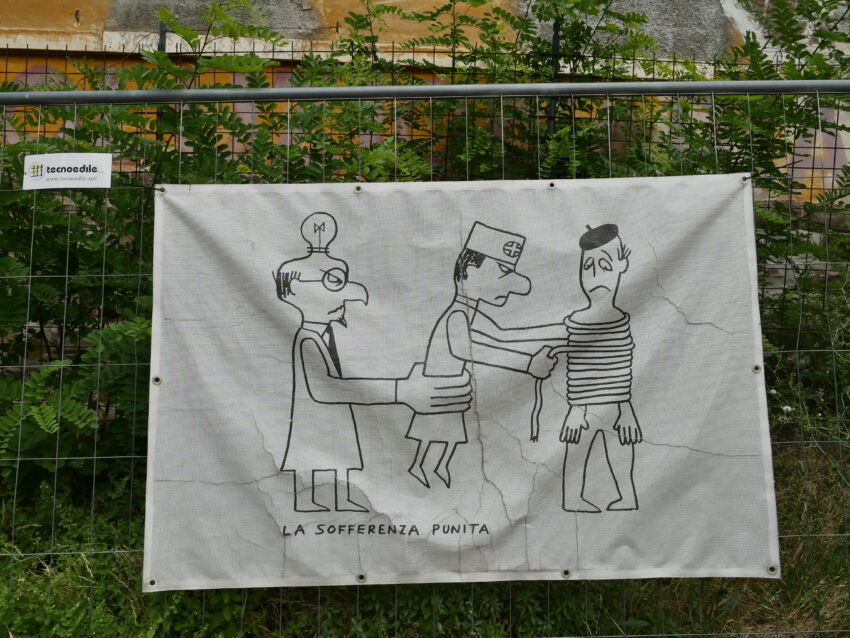
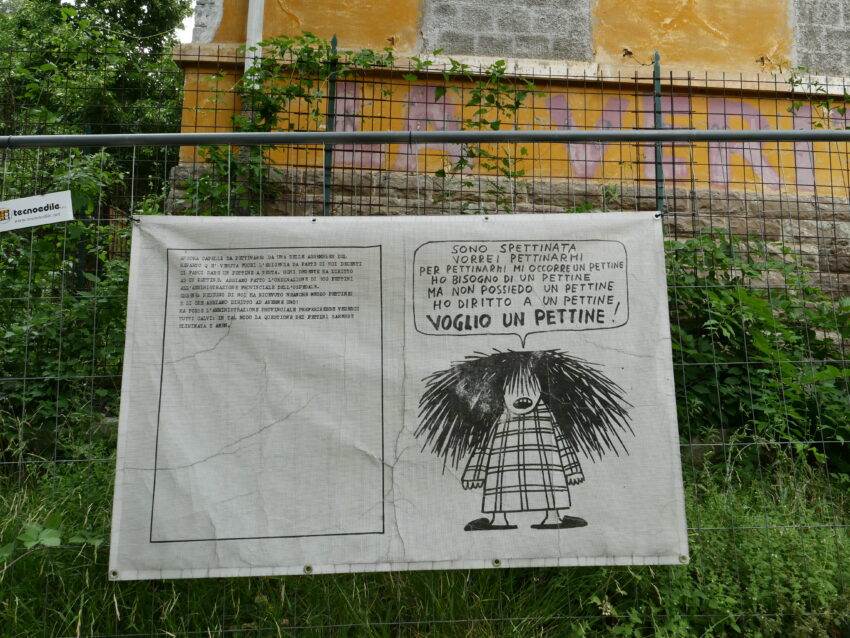
Double bind / Trieste, Italy / 2026
Più leggevo e più sono rimasto colpito dalla semplicità di alcuni dei cambiamenti che proprio per questo erano cambiamenti radicali e carichi di umanità. Per esempio:
Abolì le divise grigie e anonime dell’ospedale. I pazienti poterono tornare a indossare i propri abiti civili e a prendersi cura della propria immagine.
Aprì i reparti, eliminò le sbarre alle finestre e diede ai pazienti le chiavi delle proprie stanze e dei propri armadietti, restituendo il diritto alla riservatezza e alla libertà di andare e venire.
Mise fine alla contenzione fisica (camicie di forza, cinghie ai letti) e all’uso punitivo dell’isolamento.
Sostenne la nascita, nel 1972, della Cooperativa Lavoratori Uniti — la prima cooperativa sociale in Italia — per trasformare il lavoro all’interno dell’ospedale, fino ad allora una forma di terapia-lavoro non retribuita, in veri contratti regolarmente pagati.
Introdusse assemblee regolari in cui degenti, infermieri, medici e volontari discutevano insieme la vita dell’ospedale. Chi per decenni era stato soltanto oggetto di decisioni tornava a prendere la parola.
Tutto questo portò poi alla celebre Legge Basaglia del 1978 (la Legge 180), la riforma che ordinò la chiusura definitiva dei manicomi in Italia. Quando fu approvata avevo undici anni. Ne ho un ricordo un po’ sfuocato ma ricordo di avere letto molti anni che negli anni ’70 medici, sociologi e politici da tutta Europa si recavano a Trieste per osservare quello che Basaglia e i suoi collaboratori stavano sperimentando — proprio nel luogo in cui mi trovavo a pranzo. Qui non stavano semplicemente rimodellando un ospedale: stavano cambiando l’intero sistema della salute mentale.
This is my right! / Trieste, Italy / 2026
La cooperativa sociale Il Posto delle Fragole fa parte di questo processo di cambiamento di sistema. Nasce nel settembre del 1979 per iniziativa di un gruppo di operatori e volontari del team di Basaglia. Il nome è un omaggio al film di Ingmar Bergman. Chiamare così un locale dentro un ex manicomio è come dire che il Parco di San Giovanni non è più un luogo nel quale le persone venivano tenute, è invece un posto in cui le persone vengono perché vogliono venirci.
Seduto a quel tavolo, con il piatto di pesce davanti e l’aria d’estate che entrava dalla finestra, mi sono sentito al centro di un luogo importante dal quale è partito un grande cambiamento.
Cambiare la struttura, cambiare il sistema
Che cosa c’entra tutto questo con quello che ho imparato al corso di Nuuksio? Sul momento, a quel tavolo, niente. Il collegamento è arrivato ora, mentre scrivo questo post. Mi sembra di riuscire a collegare alcune di quelle idee al lavoro di Franco Basaglia.
Una di queste idee è quella del ‘doppio vincolo’ (o double bind). Per Gregory Bateson il doppio vincolo fa parte della comunicazione tra persone e si manifesta come una trappola relazionale in cui una persona riceve due messaggi che si contraddicono e allo stesso tempo non le è concesso far notare la contraddizione. Quando ci si trova in un doppio vincolo non c’è via d’uscita. Applicarlo a quello che ha fatto Basaglia a Trieste è un mio piccolo esperimento e mi posso ovviamente sbagliare.
Chi veniva rinchiuso in manicomio a lungo si trovava senza via d’uscita. Se protestava, la protesta era un sintomo. Se invece si adattava diventava il paziente obbediente, senza iniziativa, incapace di badare a sé stesso fuori da lì — e questa era la prova che non poteva uscire. Basaglia lo chiamava istituzionalizzazione: l’appiattimento prodotto dall’istituzione stessa.
Ed è per questo che migliorare il manicomio dall’interno — cibo migliore, pareti ridipinte, un posto un po’ più vivibile — non cambiava la sostanza. La sua natura di prigione restava intatta. Basaglia ha cambiato il sistema perché ha introdotto un punto di vista diverso, un nuovo contesto che ha rotto i doppi vincoli che il manicomio produceva nei pazienti. Ha restituito i vestiti ai pazienti, ha dato loro le chiavi per uscire e tornare, ha dato loro dei contratti di lavoro. Per Bateson l’informazione è una differenza che fa la differenza. E quello che Basaglia ha immesso nel sistema erano proprio differenze: i propri abiti al posto della divisa, una chiave in tasca al posto di una porta chiusa, un contratto di lavoro al posto di una terapia non retribuita. Differenze che hanno cambiato il significato del sistema stesso.
Un sistema sano è un sistema che cresce in complessità: sempre più relazioni, più diversità, più energia, informazione e apprendimento. Il vecchio manicomio era l’opposto: un sistema rigido che tendeva a rendere tutto omogeneo per controllare i pazienti. Oggi nello stesso spazio ci sono un museo dell’Antartide, cliniche, dipartimenti universitari, una radio sociale, un’osteria. Contesti, relazioni, complessità. Immagino sia questo, un sistema in salute.
Sono di nuovo a quel tavolo. L’aria d’estate. Un turista in mezzo a studenti, medici, dipendenti e lavoratori lì per il pranzo.
Vista da qui, a cinquant’anni di distanza e con Wikipedia aperta sul telefono, quello che ha fatto Basaglia sembra quasi scontato. Il senno di poi aiuta a costruire una storia e a dare un significato quasi lineare al cambiamento. Ma da dentro un sistema, mentre il cambiamento è in corso e non si hanno certezze, come lo si percepisce? Come si fa a sapere se ci si sta muovendo nella direzione giusta? Probabilmente non è possibile saperlo. Bisogna avere fiducia in quello che si fa e seguire l’istinto dettato dall’esperienza, e prendersi dei rischi.
Changing the structure, changing the system: a lunch in Trieste with Franco Basaglia
I visited Trieste last July, for a couple of days. I’d wanted to go for a long time. For some reason the city had always fascinated me. When I lived in Cremona it seemed far away, a border town, hard to get to. Of course it isn’t, and I think there are sometimes unconscious reasons that make us see distances as greater than they are.
A short preamble. This post is part of how I’m digesting a Warm Data course with Nora Bateson that I took at the beginning of August. I came home with a handful of ideas still turning over in my head: the double bind, information as “a difference that makes a difference”, the distinction between changing a structure and changing a system, and others. I don’t have definitive answers and I don’t claim to have understood it all. What I have found is that writing posts like this one — tying those ideas to moments I’ve actually lived, a July day in Trieste, lunch at a social osteria slightly off the beaten track — helps me understand better. So this post is an exercise, not an explanation.
So. Last July I was in Trieste. I made my way around the city with the help of a couple of Guardian articles recommending wine bars, some well known and some less so. I was following a food map to find my bearings.
It was in one of those articles that I read about the social osteria Il Posto delle Fragole. The article described it as one of Trieste’s symbols of freedom — a bar, restaurant and cultural centre inside the park of the former psychiatric hospital, in the hills above the city. That word, freedom, stayed with me, along with the name and the memory of the Ingmar Bergman film. I remember the photograph with the article: a small place, ochre walls, a low wooden fence, tables outside, the feeling of a summer evening. The article suggested taking the bus, since it sits in the hills behind Trieste, beyond the university.
The bus climbed out of the centre through 1970s apartment blocks. It passed the university, a massive fascist-era building that looks out over the whole city and down to the sea. Then the blocks ended, giving way to single-family houses, umbrella pines, the green of the hills.
I got off at my stop and for a moment regretted it. I felt a long way from the city, and thought there was probably only one bus every thirty or forty minutes. It was nearly lunchtime and very hot. The cicadas were deafening and there was no sign of the place. All I could see was a sort of concrete arch at the entrance to a park, with a sign: Parco di San Giovanni.
I checked Google Maps but couldn’t tell whether Il Posto delle Fragole was a few steps away or much further. Either way, the right direction was downhill. I followed a path through a garden of roses in vivid colours, as if indifferent to the dry, heavy heat of early afternoon. I passed the National Antarctic Museum, which seemed out of place given the heat and the season.
A few minutes later I reached Il Posto delle Fragole. As soon as I walked in I felt at ease. Large windows open onto the portico, warm air drifting across the tables, four or five young people working hard behind the bar. Lunchtime for the people who work in the buildings around the park. A high ceiling with exposed beams, tables in pale wood. A simple setting: a paper placemat, a basket of bread, cutlery, and a menu with four or five dishes of the day.
I looked around. The other customers were a table of eight or nine who looked like colleagues, an older man having lunch with a young woman whose arms were covered in tattoos, and a table of three builders.
After ordering breaded anchovies and a fish tartine, I thought how glad I was that I’d come all the way up here.
Discovering the place, and Franco Basaglia
On my way to the restaurant I’d noticed signs pointing to buildings scattered among the trees, with the names of services and departments that meant little to me; one was for the eating disorders service. Then, near the entrance, before the rose garden, I’d noticed a plaque with the name of Edoardo Weiss, the psychiatrist who had been a pupil of Sigmund Freud and whose name is tied to the history of mental health in the city.
I opened Wikipedia on my phone to find out more. So I was in the Parco di San Giovanni, the former psychiatric hospital that today houses mental health centres and university departments. The complex opened in 1908 under the Austro-Hungarian Empire, and it is the place where the revolution in modern mental health care began.
In 1971 Franco Basaglia came to run it, called in by Michele Zanetti, the president of the province. Basaglia came from the hospital at Gorizia, where from the 1960s he had begun testing his first ideas about opening up the asylums — as they were called then — but it was here in Trieste that his work found its decisive turn.
Asylums were closed institutions, essentially places of confinement where people were stripped of their rights and their identity. Basaglia came to Trieste not to make the prison more humane, but to dismantle it.
The more I read, the more I was struck by how simple some of the changes were — and how, precisely because of that, they were radical and full of humanity. For example:
He abolished the hospital’s grey, anonymous uniforms. Patients could go back to wearing their own clothes and taking care of how they looked.
He opened the wards, removed the bars from the windows, and gave patients the keys to their own rooms and lockers, restoring the right to privacy and the freedom to come and go.
He put an end to physical restraint — straitjackets, straps on beds — and to the punitive use of isolation.
He supported the founding, in 1972, of the Cooperativa Lavoratori Uniti, the first social cooperative in Italy, turning work inside the hospital — until then a form of unpaid work-therapy — into real, properly paid contracts.
He introduced regular assemblies where patients, nurses, doctors and volunteers discussed the life of the hospital together. People who for decades had only been the object of decisions could speak again.
All of this led to the Basaglia Law of 1978 (Law 180), the reform that ordered the definitive closure of the asylums in Italy. I was eleven when it passed. My memory of it is blurred, but I remember reading many years ago that through the 1970s doctors, sociologists and politicians came to Trieste from across Europe to see what Basaglia and his colleagues were doing — in the very place where I was now having lunch. What was happening here wasn’t the remodelling of a hospital. It was a change to the whole mental health system.
The Il Posto delle Fragole cooperative is part of that same change to the system. It was founded in September 1979 by a group of workers and volunteers from Basaglia’s team. The name is a nod to the Ingmar Bergman film. In Swedish, smultronstället — the wild strawberry patch — means a personal place where you feel at ease, and which you don’t usually tell anyone about. Giving that name to a bar inside a former asylum is a way of saying that the Parco di San Giovanni is no longer a place where people were kept. It’s a place people come to because they want to.
Sitting at that table, the fish in front of me and summer air coming through the window, I felt I was at the centre of an important place, one where a great change had started.
Changing the structure, changing the system
What does any of this have to do with what I learned on the course in Nuuksio? At the time, at that table, nothing. The connection came now, as I write this post. I think I can link some of those ideas to that lunch at Il Posto delle Fragole.
One of them is the double bind. For Gregory Bateson the double bind arises in communication between people, and takes the form of a relational trap in which someone receives two messages that contradict each other while also not being allowed to point out the contradiction. There is no way out. Applying it to what Basaglia did in Trieste is a small experiment of mine, and I may well be wrong. The logic of the asylum said to the patient:
You are here because you are ill, and this is a place of care. But in here I take away your every choice and relationship, and the longer you stay the less able you will be to live outside — so you have to stay locked up. And if you protest, the protest becomes proof of your illness, and one more reason to keep you here.
Anyone confined for a long time had no way out. If he protested, the protest was a symptom. If he adapted, he became the obedient patient, without initiative, unable to look after himself outside — and that was the proof he couldn’t leave. Basaglia called it institutionalisation: the flattening produced by the institution itself.
Which is why improving the asylum from the inside — better food, fresh paint, somewhere a little more liveable — didn’t change the substance. Its nature as a prison stayed intact. Basaglia changed the system because he introduced a different point of view, a new context that broke the double binds the asylum produced in its patients. For Bateson, information is a difference that makes a difference. And what Basaglia put into the system were precisely differences: your own clothes instead of a uniform, a key in your pocket instead of a locked door, a work contract instead of unpaid therapy. Differences that changed the meaning of the system itself.
A healthy system is one that grows in complexity: more relationships, more diversity, more energy, information and learning. The old asylum was the opposite — a rigid system that tended to make everything uniform in order to control its patients. Today, in the same space, there is an Antarctic museum, clinics, university departments, a community radio station, an osteria. Contexts, relationships, complexity. I imagine this is what a system in good health looks like.
I’m back at that table. Summer air. A tourist among students, doctors, staff and workers there for lunch.
Seen from here, fifty years later and with Wikipedia open on my phone, what Basaglia did looks almost obvious. Hindsight helps us build a story and give change an almost linear meaning. But from inside a system, while the change is under way and there are no certainties, how does it feel? How do you know whether you’re moving in the right direction? Probably you can’t know. You have to trust what you’re doing, perhaps follow the instinct that comes from experience, and take risks.
[As usual the English version is at the end of this post]
Sono a Kauppi, il centro sportivo di Tampere. Sono le sette di sera. C’è un bel cielo azzurro con delle nuvole rade spinte dalle correnti in alto nell’atmosfera. Sembrano soffi o pennellate leggere più che nuvole cariche di umidità.
C’è una bella palestra all’aperto che la gente frequenta la sera, vicino ai campi da calcio dove si allenano le squadre giovanili. Io arrivo in bici, mi corico sul terreno gommato e faccio stretching per la schiena. Osservo il cielo e le nuvole mentre mi tiro un ginocchio al petto e allungo i muscoli dietro la coscia.
Vedo una rondine. Solitaria, che vola alta portata dal vento, con le ali tese senza batterle. Una rondine, che strano. Qui di solito volano i piccoli gabbiani di lago — il lago è qui accanto, a 500 metri. Una rondine. Come vola leggera. Solitaria. Si è persa? Anche qui faranno il nido sotto i tetti? Da dove è venuta per l’estate? Dall’Africa, dalla Russia? Da dove?
Chiudo gli occhi per prendere un respiro più profondo, stirare i muscoli delle gambe e allo stesso tempo rilassarmi. La rondine lassù è silenzio, è troppo in alto per sentirla, ma nella mia mente sento lo stridio acuto di tante rondini.
E all’improvviso sto camminando a Bologna. Sono quasi le nove e sto facendo gli ultimi passi prima di entrare in Piazza Maggiore. Prima di vederle le sento: sento il loro stridio che si rincorre sopra la piazza. Ancora qualche passo ed eccole lì, che volano basse. Si inseguono, si parlano, si esibiscono nelle loro manovre velocissime.
Sono lì con mia figlia e, allo stesso tempo, faccio un altro salto nel tempo.
È estate, sono gli anni ’90 e sono sul terrazzo all’ingresso dell’appartamento dove abitavo con mia madre e mio fratello in Via Decia. Sono le otto, torno dal centro dove sono stato con un amico, non ho niente in mano a parte le chiavi. Il cancelletto si chiude con un piccolo clangore e le chiavi tintinnano. Non entro subito.
Il cemento del terrazzo è grigio e liscio e sotto le suole è ancora caldo del pomeriggio. Dentro, mia madre è in salotto: lavora a maglia un golf e guarda il telegiornale. Ha già mangiato — mangiava sempre presto. Mio fratello non è ancora tornato. Da noi la cena era fredda, un’abitudine tedesca che chissà perché ci portavamo dietro, e ognuno se la preparava da sé quando rientrava: pane, burro, quello che c’era. Mangiavamo tutti a orari diversi, a seconda di chi tornava e quando. Io mangerò tra poco e alle nove e mezza sarò di nuovo in centro a decidere cosa fare.
Ma per adesso sto fermo qui, ad ascoltare le rondini e a osservarle volare sopra i tetti della Scuola Manzoni. Vedo il profilo del Duomo e il Torrazzo. Sento il calore umido della nostra estate padana. La luce estiva del tramonto che non arriva mai. La nostra casa. Le rondini di Cremona.
Queste invece sono le rondini di Bologna. Le osservo e mi sento a casa, in un posto familiare. Mi viene in mente Lucio Dalla e la sua Le rondini, come se il filo di questo volo unisse tutti i tetti della mia vita
Entriamo in piazza. C’è molta gente arrivata per tempo per prendere posto sulle sedie di fronte al grande schermo del cinema estivo. Questa sera danno un vecchio film di Orson Welles e la piazza si riempirà sempre di più, finché le sedie non basteranno e la gente si siederà sui gradini della cattedrale. Le rondini nel frattempo continuano incuranti i loro voli temerari. Si buttano dalla facciata della cattedrale, dove hanno i nidi, e si gettano in picchiata sulla piazza per catturare insetti. Continuano anche quando si fa buio e si avvicina l’inizio della proiezione. Poi i loro gridi scompaiono, inghiottiti dall’audio del film.
Sono seduto con mia figlia e altri bolognesi accanto a noi. Il selciato restituisce il caldo di una giornata intensa. Ma si sta bene. C’è una bella atmosfera d’estate.
Riapro gli occhi a Tampere e porto le gambe sul lato per fare stretching alla schiena, ginocchia alte. Non vedo più la rondine sopra di me. Ma la ringrazio: grazie a lei ho fatto due salti nel tempo durati pochi secondi, ma lunghissimi nel ricordo. Grazie, rondinella.
The Swallows
I am in Kauppi, the sports centre in Tampere. It’s seven in the evening. There’s a fine blue sky with a few scattered clouds pushed along by the currents high up in the atmosphere. They look like breaths, or light brushstrokes, more than clouds heavy with moisture.
There’s a good outdoor gym that people use in the evenings, next to the football pitches where the youth teams train. I arrive by bike, lie down on the rubber matting and stretch my back. I watch the sky and the clouds while I pull one knee to my chest and lengthen the muscles behind my thigh.
I see a swallow. Alone, flying high, carried by the wind, wings held out without beating them. A swallow — how strange. Usually it’s the small lake gulls that fly here; the lake is right beside us, five hundred metres away. A swallow. How lightly it flies. Alone. Has it lost its way? Do they nest under the eaves here too? Where has it come from for the summer? From Africa, from Russia? From where?
I close my eyes to take a deeper breath, to stretch the muscles in my legs and relax at the same time. The swallow up there is silence — too high to be heard — but in my mind I hear the sharp screeching of many swallows.
And suddenly I’m walking in Bologna. It’s almost nine and I’m taking the last steps before entering Piazza Maggiore. I hear them before I see them: their cries chasing each other over the square. A few steps more and there they are, flying low. Chasing one another, talking to one another, showing off in their lightning manoeuvres.
I’m there with my daughter and, at the same time, I make another jump in time.
It’s summer, it’s the nineties, and I’m on the terrace at the entrance of the flat where I lived with my mother and my brother in Via Decia. It’s eight o’clock, I’m back from the centre where I’ve been with a friend, nothing in my hands but the keys. The little gate shuts with a small clang and the keys jingle. I don’t go straight in.
The concrete of the terrace is grey and smooth and still warm from the afternoon under my soles. Inside, my mother is in the living room, knitting a jumper and watching the news. She’s already eaten — she always ate early. My brother isn’t back yet. In our house dinner was cold, a German habit we carried around with us for who knows what reason, and each of us made it for himself when he got in: bread, butter, whatever there was. We all ate at different hours, depending on who came home and when. I’ll eat shortly, and by half past nine I’ll be back in the centre deciding what to do.
But for now I stand here, listening to the swallows and watching them fly over the roofs of the Scuola Manzoni. I can see the outline of the Duomo and the Torrazzo. I feel the damp heat of our Po Valley summer. The summer light of a sunset that never comes. Our home. The swallows of Cremona.
These, though, are the swallows of Bologna. I watch them and I feel at home, in a familiar place. Lucio Dalla comes to mind, and his Le rondini, as if the thread of this flight tied together all the roofs of my life.
We go into the square. A lot of people have come early to take a seat in front of the big screen of the summer cinema. Tonight they’re showing an old Orson Welles film and the square will keep filling up, until there aren’t enough chairs and people sit on the cathedral steps. The swallows, meanwhile, carry on with their reckless flights, indifferent. They throw themselves off the cathedral facade, where their nests are, and dive down over the square to catch insects. They keep at it even as it gets dark and the start of the film draws near. Then their cries disappear, swallowed by the film’s soundtrack.
I’m sitting with my daughter, other Bolognesi beside us. The paving gives back the heat of an intense day. But it’s pleasant. There’s a fine summer feeling.
I open my eyes again in Tampere and take my legs over to one side to stretch my back, knees high. I can’t see the swallow above me any more. But I thank her: thanks to her I made two jumps in time that lasted a few seconds but were very long in memory. Thank you, little swallow.
The difference that makes the difference / Nuuksio, Helsinki / 2026
[As usual the English version is at the end of this post]
Sono rientrato a Tampere da qualche giorno. Ho passato la settimana scorsa in un hotel alle porte di Nuuksio, il parco nazionale vicino a Helsinki, per il corso con Nora Bateson per diventare host dei Warm Data Lab.
Eravamo una sessantina. La maggior parte dall’Europa, qualche americano, e alcuni venuti da lontano: Colombo, Singapore, Hanoi, Pechino. E di tutte le età: c’era chi aveva persino trent’anni meno di me, la maggior parte con dieci o quindici anni meno di me e chi ne aveva alcuni di più. Anche questo, credo, ha contribuito a fare della stanza quello che è stata.
Qualche giorno prima di partire avevo pensato che otto giorni in un hotel vicino a un parco nazionale sarebbero stati un po’ lunghi. Ricordo di averlo pensato proprio così, con quel tono lì.
Il ritmo
Il ritmo era questo. Colazione. Lezione. Pranzo. Warm Data Lab. Lezione. Sport o una camminata nel bosco. Cena. Sauna. Tuffo nel lago. A nanna.
E il giorno dopo di nuovo, uguale.
È stato quel ritmo a creare la base per tutto il resto: le conversazioni durante i Lab, le chiacchierate a tavola, il raccontare, il conoscerci. Non credo sia stato un caso. Otto giorni non sono lunghi: sono il tempo che ci vuole.
Eravamo solo il nostro nome
C’è una cosa che ho notato il primo giorno. Gli organizzatori ci hanno chiesto di scrivere il nostro nome su un pezzo di quello scotch di carta, con un pennarello colorato. Solo il nome. Eravamo solo il nostro nome.
Non ci è mai stato chiesto di presentarci agli altri alzandoci in piedi per dire chi siamo, da dove veniamo, cosa facciamo. Niente ruoli, niente organizzazioni, niente titoli. E non perché se ne fossero dimenticati: sarebbe stato in attrito con quello di cui il corso parlava. Il conoscerci è avvenuto a poco a poco, nelle pause, facendo sport, mangiando insieme. È lì che chiedevo e mi chiedevano da dove venivo, cosa faccio, da quanto tempo vivo in Finlandia. Poco per volta, in maniera spontanea.
Ci ho messo qualche giorno a capire cosa mi faceva. Sono trent’anni che nei workshop, nelle riunioni, nelle presentazioni alle conferenze mi presento — o vengo presentato — come quello che fa quel lavoro lì, per quell’organizzazione lì. È comodo, ti dà una posizione, ti mette in relazione con gli altri a partire da quel punto di vista. Ma è anche limitante e riduttivo.
Per otto giorni non è stato così. Mi presentavo per nome e poi bisognava andare avanti in qualche altro modo, e all’inizio non sapevo bene come. Non ho parlato con tutti, anche se credo di essermi presentato a tutti. Solo l’ultimo giorno ho sentito il cognome di qualcuno, quando ci siamo scambiati le mail per restare in contatto.
E quello che è venuto fuori al posto del ruolo ero io: con la mia parte italiana, quella tedesca e anche quella finlandese. Quando siamo solo il nostro nome siamo forse di più.
Le cose di contorno
E qui mi accorgo che sto descrivendo le cose di contorno. L’organizzazione, il ritmo, il posto, lo scotch di carta.
Lo faccio perché non so da dove partire. Parlare di Gregory Bateson? Di Nora Bateson? Del loro lavoro? Della definizione di Warm Data? Del Lab in sé? Oppure — cosa che mi riesce più difficile — dell’esperienza del corso?
Ho provato tre volte a scrivere il paragrafo che spiega cos’è un Warm Data Lab, e tre volte l’ho cancellato. Veniva fuori una cosa che potrebbe scrivere chiunque abbia letto il sito. E poi credo che il punto sia proprio quello: non è materiale che si trasmette spiegandolo. Se si potesse spiegare in un paragrafo non ci sarebbero voluti otto giorni.
Allora provo a fare un’altra cosa. Invece di spiegare cos’è, provo a raccontare cosa vedreste se apriste la porta ed entraste dentro un Lab.
Se apriste la porta
Vedreste delle persone sedute in gruppetti di tre o quattro, che parlano. Qualcuno parla, qualcuno ascolta. Qualcuno dice: ah sì, questo mi fa venire in mente quella volta che…
Al centro di ogni gruppo vedreste un foglio di carta con sopra scritta una parola sola. Educazione. Società. Politica. Economia. Tecnologia. Scienza. Ogni tanto qualcuno guarda il foglio e pensa a cosa dire.
Poi vedreste qualcuno alzarsi, girare per la stanza e scegliere un altro gruppo dove sedersi. Qualcuno resta fermo, ma la maggior parte si sposta. A volte una persona si siede da sola in un cerchio di sedie vuote, e dopo poco arriva qualcun altro e si mettono a raccontare.
Perché è questo che si fa, soprattutto: si raccontano storie. Storie che vengono fuori dalla parola scritta sul foglio e da una domanda che l’host ha dato a tutti all’inizio, dopo aver raccontato per primo una storia sua. La domanda è una sola, per tutti, e suona più o meno così: cos’è la casa in un mondo che cambia? Cos’è l’educazione in un mondo che cambia? Cos’è il rischio in un mondo che cambia?
Una domanda sola, e poi i gruppi che si muovono e si ricompongono, e quella domanda che viene messa in relazione con il contesto scritto sul foglio. Girando da un gruppo all’altro la stessa domanda ti arriva ogni volta da un’angolatura diversa: diversa per il contesto, e diversa per le storie che le persone portano — che sono a loro volta contesti, e più di uno, perché noi siamo le storie che raccontiamo.
Tutto questo dura circa un paio d’ore, dall’introduzione iniziale fino alla sintesi finale, quando ci si ritrova di nuovo tutti insieme.
Ecco, se entraste in un Lab vedreste questo. Delle persone sedute che si raccontano delle storie. Non sembra granché, detto così. Ma sotto c’è un metodo, e una ricerca che viene da lontano: principi e concetti legati ai sistemi, alla complessità, alla comunicazione, all’ecologia. Il Lab ha radici profonde.
Il quarto giorno
Il giorno più difficile è stato il quarto, quando Nora ha parlato del rischio. Del rischio come parte dei sistemi, del rischio nel cambiare, del rischio di fallire, di come i sistemi sociali e naturali smettono di essere tali. A un certo punto ha detto che il rischio più grande è non correrne nessuno.
Non me l’aspettavo, ma quelle parole mi hanno toccato in un punto che non avevo messo in conto. Non per ragioni teoriche. Il rischio, per come l’ho conosciuto io, ha a che fare con cose precise della mia vita, e in quel momento sono tornate su tutte insieme.
Credo sia successo perché quella stanza l’aveva reso possibile. Dopo tre giorni di Lab, di storie ascoltate e raccontate, si era aperto uno spazio in cui certe cose potevano arrivare. Ero vulnerabile a quelle parole, ma in un certo senso ero anche pronto: pronto a sentire quel dolore e quello che si porta dietro, su piani diversi.
Non credo che Nora avesse torto. Credo che certe frasi, dette a sessanta persone insieme, arrivino a ciascuno in un punto diverso, e che nessuno possa saperlo in anticipo — né chi le dice, né chi le ascolta. Anche questo, se ci penso, è warm data.
Com’è stato?
Poi martedì il corso è finito. Le valigie, il taxi, il treno verso Tampere con Katja e due compagne del corso.
Mercoledì, il giorno dopo il rientro, ho avuto due call con due colleghe, una a Singapore e una a Islamabad. Tutte e due mi hanno chiesto la stessa cosa: com’è stato? Com’era? Racconta.
Allo stesso tempo io avevo proprio bisogno di raccontare. Credo sia successo ad altri in quei giorni, questa cosa di scoppiare dalla voglia di spiegare e parlarne a qualcuno. Quello che avevo ascoltato, le persone che avevo incontrato, e quella specie di legame che si era formato giorno dopo giorno senza che nessuno l’avesse annunciato.
Solo che appena ho cominciato a parlare mi sono accorto che le parole non ci arrivavano. Saltavo di qua e di là — learning, sistemi, complessità, le storie dei Lab — seguendo delle immagini che nella mia testa non seguivano affatto l’ordine degli otto giorni, ma andavano da un giorno all’altro collegando quasi a caso idee, pensieri e immagini, con un nesso che non è lineare e che segue altre tracce, più misteriose, del nostro io e della nostra mente.
Le mie colleghe sono state gentili. Ma non credo di aver detto niente di quello che volevo dire.
Una tazza di caffè
Una di queste immagini è un’intervista, in un documentario su Gregory Bateson che abbiamo guardato insieme. Parla con l’intervistatrice — che credo sia Nora — e le dice: la vedi questa tazza di caffè? Noi sappiamo che la tazza che vedo io è diversa da quella che vedi tu. Il colore, la forma, la tonalità. Magari differenze piccolissime, sottili, ma pur sempre differenze. Quindi siamo d’accordo che ci sono delle differenze, ma siamo anche d’accordo che è una tazza. Bene. E non solo questo: io sono anche interessato ad apprendere da te come la vedi tu.
E poi conclude: quanti problemi al mondo sarebbero risolti se questa fosse l’impostazione fra gli esseri umani. Il pensiero, il rispetto e l’umiltà di ammettere che non sappiamo, e che l’apprendimento avviene quando notiamo un angolo e un punto di vista diverso dal nostro. Quel notare la differenza è l’apprendimento, ed è quello che informa le nostre decisioni e il nostro comportamento.
Sembra ovvio, vero? Ma non lo è.
Quello che rimane
Sono grato per quegli otto giorni, e per le persone che ho incontrato.
E sono tornato a casa con un’energia che non mi aspettavo, e con la sensazione che vada usata. Voglio parlarne con i colleghi, con gli amici, in famiglia. E voglio capire se il Warm Data possa diventare qualcosa che faccio da qualche parte — magari in Italia, o qui a Tampere, che è una città in cui dopo tanti anni non sono ancora del tutto entrato. Ma questo è un altro discorso.
Intanto lascio depositare, e fra un mese scriverò un nuovo post per vedere cosa è rimasto e cosa ho imparato.
—-
Eight days in Nuuksio, and Warm Data
I got back to Tampere a few days ago. I spent last week in a hotel at the edge of Nuuksio, the national park near Helsinki, on the course with Nora Bateson to become a Warm Data Lab host.
There were about sixty of us. Mostly from Europe, a few Americans, and some who had come a long way: Colombo, Singapore, Hanoi, Beijing. And of all ages: some even thirty years younger than me, most ten / fifteen years younger than me and some a little bit older than me. That too, I think, was part of what made the room what it was.
A few days before leaving I had thought that eight days in a hotel next to a national park might be a bit long. I remember thinking it exactly like that, in that tone.
The rhythm
The rhythm was this. Breakfast. Class. Lunch. Warm Data Lab. Class. Sport, or a walk in the woods. Dinner. Sauna. A dive into the lake. Bed.
And the next day again, the same.
It was that rhythm that made everything else possible: the conversations during the Labs, the talk around the table, the telling, the getting to know each other. I don’t think that was an accident. Eight days aren’t long — they’re how long it takes.
We were only our names
There’s something I noticed on the first day. The organisers asked us to write our name on a piece of that paper masking tape, with a coloured marker. Just the name. We were only our names.
Nobody ever asked us to stand up and introduce ourselves to the others: who we are, where we come from, what we do. No roles, no organisations, no titles. And not because they had forgotten: it would have been at odds with what the course was about. Getting to know each other happened slowly, in the breaks, doing sport, eating together. That’s where I asked and was asked where I came from, what I do, how long I’ve lived in Finland. Bit by bit, and of its own accord.
It took me a few days to work out what that was doing to me. For thirty years, in workshops, in meetings, in conference presentations, I have introduced myself — or been introduced — as the one who does that particular job, for that particular organisation. It’s convenient. It gives you a position, and it puts you in relation to other people from that point of view. But it’s also limiting, and reductive.
For eight days it wasn’t like that. I introduced myself by name and then we had to go on somehow else, and at first I wasn’t sure how. I didn’t speak to everyone, though I think I introduced myself to everyone. It was only on the last day that I heard anyone’s surname, when we exchanged emails to stay in touch.
And what came out in place of the role was me: with my Italian part, my German part, and the Finnish one too. When we are only our names, perhaps we are more.
The things around the edges
And here I notice that I’m describing the things around the edges. The organisation, the rhythm, the place, the paper tape.
I’m doing it because I don’t know where to start. Talk about Gregory Bateson? About Nora Bateson? About their work? About the definition of Warm Data? About the Lab itself? Or — the one I find hardest — about what the course was like?
Three times I tried to write the paragraph that explains what a Warm Data Lab is, and three times I deleted it. What came out was something anyone who had read the website could have written. And then I think that’s exactly the point: it isn’t material that transmits by being explained. If you could explain it in a paragraph it wouldn’t have taken eight days.
So let me try something else. Instead of explaining what it is, let me describe what you would see if you opened the door and walked into a Lab.
If you opened the door
You would see people sitting in little groups of three or four, talking. Someone talking, someone listening. Someone saying: oh yes, that reminds me of the time when…
In the middle of each group you would see a sheet of paper with a single word written on it. Education. Society. Politics. Economy. Technology. Science. Every so often someone glances at the sheet and thinks about what to say.
Then you would see someone get up, wander across the room and choose another group to sit down with. Some stay where they are, but most move. Sometimes a person sits alone in a circle of empty chairs, and after a little while someone else arrives and they start telling each other things.
Because this is mostly what you do: you tell each other stories. Stories that come out of the word written on the sheet, and out of a question the host gave everyone at the start, after telling a story of their own first. There is only one question, the same for everyone, and it sounds more or less like this: what is home in a changing world? What is education in a changing world? What is risk in a changing world?
One question, and then the groups moving and re-forming, and that question set against the context written on the sheet. Moving from one group to another, the same question reaches you each time from a different angle: different because of the context, and different because of the stories people bring — which are themselves contexts, and more than one, because we are the stories we tell.
All of this lasts about two hours, from the initial introduction to the final synthesis, when everyone comes back together again.
That’s it — if you walked into a Lab, that’s what you would see. People sitting and telling each other stories. Doesn’t sound like much, put that way. But underneath there is a method, and research that comes from a long way back: principles and concepts to do with systems, complexity, communication, ecology. The Lab has deep roots.
The fourth day
The hardest day was the fourth, when Nora spoke about risk. Risk as part of systems, the risk in changing, the risk of failing, the way social and natural systems stop being what they were. At one point she said that the greatest risk is to take none.
I hadn’t expected it, but those words touched me somewhere I hadn’t accounted for. Not for theoretical reasons. Risk, as I have known it, has to do with particular things in my life, and in that moment they all came back at once.
I think it happened because that room had made it possible. After three days of Labs, of stories heard and told, a space had opened where certain things could arrive. I was vulnerable to those words, but in a way I was also ready: ready to feel that pain and what comes with it, on different levels.
I don’t think Nora was wrong. I think certain sentences, said to sixty people at once, land in a different place in each of them, and that nobody can know that in advance — neither the person saying them nor the person hearing them. That too, if I think about it, is warm data.
How was it?
Then on Tuesday the course ended. The suitcases, the taxi, the train back to Tampere with Katja and two others from the course.
On Wednesday, the day after we got home, I had two calls with two colleagues, one in Singapore and one in Islamabad. Both asked me the same thing: how was it? What was it like? Tell me.
And at the same time I badly needed to tell it. I think that happened to others in those days too, this business of being ready to burst with wanting to explain it to someone. What I had heard, the people I had met, and that kind of bond that had formed day after day without anyone announcing it.
Except that as soon as I started talking I realised the words weren’t reaching. I jumped around — learning, systems, complexity, the stories from the Labs — following images that in my head followed no order at all, going from one day to another and linking ideas, thoughts and images almost at random, with a connection that isn’t linear and that follows other, more mysterious traces of ourselves and of our minds.
My colleagues were kind. But I don’t think I said any of what I wanted to say.
A coffee cup
One of those images is an interview, in a documentary about Gregory Bateson that we watched together. He is talking with the interviewer — who I think is Nora — and he says to her: do you see this coffee cup? We know that the cup I see is different from the cup you see. The colour, the shape, the shade. Perhaps tiny differences, very subtle ones, but differences all the same. So we agree that there are differences, and we also agree that it is a cup. Good. And not only that: I am also interested in learning from you how you see it.
And then he concludes: how many of the world’s problems would be solved if this were the setting between human beings. The thought, the respect, and the humility of admitting that we don’t know, and that learning happens when we notice an angle and a point of view different from our own. That noticing of the difference is the learning, and it is what informs our decisions and our behaviour.
Sounds obvious, doesn’t it? It isn’t.
What stays
I’m grateful for those eight days, and for the people I met.
And I came home with an energy I wasn’t expecting, and with the sense that it should be used. I want to talk about it with colleagues, with friends, at home. And I want to work out whether Warm Data could become something I do somewhere — maybe in Italy, or here in Tampere, a city I still haven’t quite got into after all these years. But that’s another story.
For now I’ll let it settle, and in a month I’ll write another post to see what has stayed and what I have learned.
[Scorri verso il basso per la versione in italiano]
In September 1996, I left Cremona for Glasgow. I was 29 years old, a partner in an IT company called Gamm System, and I had agreed on a one-year sabbatical with my colleagues and friends to study Economic Development. The plan was simply to leave for twelve months, get my degree, and return.
Thirty years later, I am still overseas.
I have returned to Cremona at least once a year ever since, although in recent years, maybe because I am growing older, I find myself coming back a couple of times a year. It is a strange experience to return so regularly—you notice the slow, incremental changes that people living there might miss.
The social grid of the 1990s
The Cremona I left behind was defined by somewhat rigid and unwritten social codes. In the evenings at around 7 PM, people would gather downtown at the Galleria. We didn’t always buy a drink; it was more about socializing and meeting friends. From Friday to Sunday the place was really lively with people walking around, chatting, and making plans for the evening.
The town was divided by the compagnie—closed groups of friends that defined where you went, which bars you frequented downtown, and where you didn’t go. It wasn’t hostile, but the groups stuck to their specific places.
Social class mattered too. There was a fictional high class—the so-called Cremona bene that would meet in some bars which we did not go to. I didn’t belong to that world but at the same time I never liked sticking to just one compagnia.
On summer Saturday nights, I would spend time with the group of friends of the Trattoria Cerri, then cycle to the Piazza del Duomo to look for people I knew from entirely different circles. Breaking those social boundaries wasn’t common, but staying in one box didn’t seem right to me.
The empty backdrop
I do not know whether those old compagnie have faded today. What is really visible is that downtown feels quite empty nowadays, a somewhat soulless center where many of the family shops of my youth have closed or have Affittasi (For rent) and Vendesi (For sale) signs in the windows.
This physical emptiness of the city center is important because it doesn’t help. A hollowed-out downtown offers no real warmth or welcoming spaces. Instead, it has become the quiet stage for a different kind of social reality: a growing sense of youth disagio (distress).
But the silence in the streets isn’t just about closing shops; it is also about where we look for each other. Today, you no longer need to walk downtown to see who is out—you simply swipe through them on a screen. We are more connected globally, yet more isolated locally.
Of course, this digital bridge works differently for those of us who already share deep, established bonds. For me, technology is a gift that keeps me in touch with old friends from whom I live far away. But for a younger generation trying to build their first real communities, this purely virtual existence is a poor substitute for physical presence. The physical emptiness of the city center of town is important because it doesn’t help. A hollowed-out downtown offers no real warmth or welcoming spaces. Instead, it has become the quiet stage for a different kind of social reality: a growing sense of youth disagio (distress).
Distress vs safety
This quietness in the center has been accompanied by a sort of social disagio (distress) that for some mirrors a sense of danger when passing through the center at night.
This is perceived differently by people I spoke to during my recent visit. Some perceive the danger. Others do not draw a causal link between distress and safety. They think that Cremona isn’t an inherently dangerous city. However what is noticeable is that the perception of safety in this small and well off provincial city has shifted.
Ten years ago, you wouldn’t hesitate to walk through the center late on a weekend night. Today, people seem to pay a bit more attention. The underlying issue seems to be a distinct social distress among a specific group of younger people.
These are often youngsters who come from lower income families, may struggle or have dropped out of school and face poor job prospects. They are described to me as hanging around, hooked to social media, and having nothing to do. When you combine disillusionments with the friction amplified by social media, tempers can flare, occasionally resulting in the weekend brawls.
Band-aids and temporary fixes
To be fair, the authorities aren ‘t completely static. During my last visit, a cousin pointed out that they have been trying to organize more activities in the center of town. This summer, they brought back the Festa della Musica, turning public squares into open-air stages, alongside the weekly Giovedì d’estatewhich brings live music and DJ sets in local bars.
At the same time, the local papers report plans to restrict evening alcohol sales in specific downtown hotspots to curb the late-night brawls.
While the music events are positive, they feel like temporary fixes. One tries to distract the youngsters with music and by taking away their drinks. Neither address school dropout rates, family struggles, or the lack of economic opportunities. To truly change this dynamic, we need a systems-thinking approach that reimagines what our public spaces can be and who they are actually for.
A tale of two piazzas
The week before my last visit home, I was in Bologna for Il Cinema Ritrovato film festival. Bologna is much larger, wealthier, and more international, so a direct comparison isn’t fair. But one detail stuck with me.
Every night at 21:45, Piazza Maggiore was completely packed. One night they showed Orson Welles’ The Stranger(1946) in its original language with subtitles; the next, a 1927 silent Finnish movie with live avant-garde music. The crowd sat on the cathedral steps, completely engaged.
When I returned to Cremona and looked at our beautiful Piazza del Duomo, I tried to imagine a screen there showing old, subtitled films. I struggled to see it. I suspect very few people would show up, and many would complain.
But Cremona is not Bologna. You don’t get massive, diverse crowds watching black-and-white foreign films in a public square overnight. That capacity is built over time. It requires consistent, inclusive cultural programming that slowly breaks down the old compagnie mindset and invites everyone—including the youngsters who seem excluded—into the shared life of the city.
Maybe that would be a true way to revive the center, to make it more lively, and to offer options and interest to all citizens.
A system-wide alternative
If we want to move past these superficial solutions and build this kind of long-term integration, we have to look at structural root causes.
Perhaps we can draw inspiration from the international development sector. There is a proven, system-wide approach known as the Graduation approach (pioneered by the NGO BRAC in Bangladesh). The approach emerged about twenty years ago through trial and error, fine-tuning a method designed to improve the livelihoods of the country’s ultra-poor families. Instead of relying on isolated, temporary safety nets, it uses a sequenced strategy: covering basic needs first, helping start a small business activity alongside vocational training, and providing a confidence boost and psychological support through intensive, one-on-one coaching.
What if a local government like Cremona designed a localized version of this? The municipality already has various social services and youth programs in place, but they often operate in isolation and may be under-resourced.
The real difference maker in this approach is the convergence and synergies of these existing services. It requires a highly coordinated, synced system where some form of financial aid, vocational and non-vocational education, and social assistance aren’t separate departments, but a single, unified path.
Crucially, this model relies on building a relationship of support and trust with a dedicated coach or social worker who is actually available and visible in the community. By syncing local services around these trusted figures—and complementing this with open-air cultural activities in the center during the summer—the city could actively reach out to struggling, at-risk youngsters. There could be groups paired with mentors, help them develop new interests, bring meaningful life back to the center, and align their skills with actual local economic opportunities. We would be systematically helping them graduate out of distress and into active, productive participation.
Moving forward
The insularity of the 1996 compagnie seems to have evolved into a sort of cultural inertia today. We have been a provincial town looking inward for so long that it remains difficult to introduce truly transformative ideas or to utilize our public spaces creatively.
I enjoy coming back to see friends and relatives, sitting down for an aperitif, and catching up on our lives with relatives and friends. It gives me great energy. But it is difficult to ignore the quiet stagnation I have seen emerging over time.
Cremona needs to be revitalized. Of course, resources are limited, and a town of 70,000 cannot fund massive overhauls overnight. But real change requires both local authorities and civil society to have the courage to test and learn from social innovation. Entertainment during the summer is a pleasant diversion, but it is not a systemic solution. We need to deeply involve the younger generation in the creation of their own future, and realize that the mindset and habits that keep a community comfortable can also keep it stuck.
Appunti di viaggio da Cremona
Nel settembre del 1996 ho lasciato Cremona per Glasgow. Avevo 29 anni, ero socio di una società informatica chiamata Gamm System e avevo concordato un anno sabbatico con i miei colleghi e amici per studiare Sviluppo Economico. Il piano era semplice: partire per dodici mesi, prendere la specializzazione e tornare.
Trent’anni dopo, vivo ancora all’estero.
Da allora sono tornato a Cremona almeno una volta all’anno, anche se negli ultimi tempi, forse anche perché sto invecchiando, mi ritrovo a tornare un paio di volte all’anno, spinto dai legami familiari e dagli amici. È un’esperienza particolare ritornare così regolarmente: noti i cambiamenti lenti e progressivi che chi vive lì potrebbe non percepire.
Il reticolo sociale degli anni ’90
La Cremona che ho lasciato era definita da codici sociali piuttosto rigidi e non scritti. La sera, verso le 19:00, ci si ritrovava in centro alla Galleria. Non sempre si comprava da bere; si trattava piuttosto di socializzare e incontrare gli amici. Dal venerdì alla domenica il posto era davvero animato, con persone che passeggiavano, chiacchieravano e facevano programmi per la serata.
La città era divisa dalle compagnie — gruppi chiusi di amici che definivano dove andavi, quali bar frequentavi in centro e dove invece non andare. Non c’era un’ostilità aperta, ma i gruppi rimanevano fedeli ai loro spazi specifici.
Anche l’appartenenza sociale aveva il suo peso. C’era la cosiddetta Cremona bene che si incontrava in alcuni bar dove noi non andavamo. Non appartenevo a quel mondo, ma allo stesso tempo non mi è mai piaciuto limitarmi a una sola compagnia.
Nelle sere d’estate del sabato, passavo il tempo con il gruppo di amici della Trattoria Cerri, per poi andare in bici fino a Piazza del Duomo alla ricerca di persone che conoscevo in cerchie del tutto diverse. Rompere questi confini sociali non era comune, ma rimanere chiuso in un solo gruppo non faceva per me.
Il vuoto del centro
Non so se quelle vecchie compagnie siano svanite oggi. Ciò che è evidente è che il centro storico si è svuotato notevolmente. Oggi appare piuttosto deserto, un centro un po’ privo di anima dove molti dei negozi storici della mia giovinezza hanno chiuso, sostituiti dai cartelli di Affittasi e Vendesi alle vetrine.
Ma il silenzio nelle strade non riguarda solo la chiusura delle attività. Oggi non c’è più bisogno di andare in centro per vedere chi c’è in giro: basta scorrere le app del proprio cellulare. La nostra vita digitale iperconnessa ha rimosso la necessità fisica di incontrarsi di persona. Siamo più connessi a livello globale, ma più isolati a livello locale.
Naturalmente, questo ponte digitale non funziona in modo omogeneo. Per me, la tecnologia è un dono che permette di restare in contatto con i vecchi amici lontani. Ma per una generazione più giovane questa esistenza puramente virtuale è un debole sostituto della presenza fisica. Il vuoto fisico del centro città certamente non aiuta. Un centro svuotato non offre calore o spazi accoglienti. È diventato, invece, lo sfondo silenzioso di una realtà sociale diversa: un crescente senso di disagio giovanile.
Disagio e percezione di sicurezza
Questa diffusa inquietudine in centro ha portato alcuni a percepire un reale senso di insicurezza.
Si tratta di una situazione vissuta in modo molto diverso dalle persone con cui ho parlato durante la mia recente visita. Se per alcuni il pericolo è concreto, altri non vedono un legame diretto tra disagio e sicurezza personale. Pensano che Cremona non sia una città intrinsecamente pericolosa, quanto piuttosto una realtà con un problema di disagio che va affrontato in maniera seria, pur rimanendo, tutto sommato, un posto sicuro.
Detto questo, a me sembra che la percezione della sicurezza in questa piccola e benestante città di provincia sia cambiata. Dieci anni fa non avresti esitato a camminare in centro a tarda notte nel fine settimana. Oggi, le persone sembrano fare un po’ più di attenzione.
Il problema di fondo sembra essere un chiaro disagio sociale tra un gruppo specifico di giovani. Si tratta spesso di ragazzi che provengono da famiglie a basso reddito, che faticano a scuola o l’hanno abbandonata, e che affrontano scarse prospettive di lavoro. Mi sono stati descritti come giovani che passano il tempo in giro, legati ai social media e senza nulla da fare. Quando si unisce la disillusione alle tensioni amplificate dai social, gli animi possono scaldarsi, sfociando talvolta nelle risse del fine settimana riportate dalle cronache locali.
Soluzioni e risposte temporanee
A dire il vero, le autorità non sono del tutto ferme. Durante la mia ultima visita, una cugina mi ha fatto notare che il Comune sta cercando di organizzare più attività in centro. Quest’estate è stata riproposta laFesta della Musica, che ha trasformato le piazze storiche in palchi all’aperto, insieme ai settimanali Giovedì d’estate che portano musica dal vivo e DJ set nei bar del centro.
Allo some tempo, i giornali locali riportano l’intenzione di vietare la vendita di alcolici nelle ore serali in alcune zone calde del centro per frenare gli scontri notturni.
Sebbene gli eventi musicali siano un segnale positivo, secondo me — proprio come i divieti sugli alcolici — sono delle risposte temporanee. Si cerca di distrarre i giovani con la musica o di controllarli togliendo loro da bere. Nessuno dei due provvedimenti affronta l’abbandono scolastico, le difficoltà familiari o la mancanza di opportunità economiche. Per cambiare davvero questa dinamica, serve un approccio sistemico che ripensi a cosa possono essere i nostri spazi pubblici e a chi siano effettivamente destinati.
Una storia di due piazze
La settimana prima del mio ultimo viaggio a Cremona, ero a Bologna per il festival Il Cinema Ritrovato. Bologna è molto più grande, ricca e internazionale, quindi so che un confronto diretto con Cremona non è del tutto corretto. Ma un dettaglio mi è rimasto impresso.
Ogni sera alle 21:45, Piazza Maggiore era completamente gremita. La prima sera proiettavano The Stranger (1946) di Orson Welles in lingua originale con i sottotitoli; la sera successiva, un film muto finlandese del 1927 con musica d’avanguardia dal vivo. Il pubblico riempiva ogni spazio, seduto persino sui gradini della cattedrale.
Quando sono tornato a Cremona e ho guardato la nostra splendida Piazza del Duomo, ho provato a immaginare uno schermo che mostrava vecchi film sottotitolati. Ho fatto fatica a vederlo possibile. Sospetto che si presenterebbero pochissime persone, e molti si lamenterebbero dell’iniziativa.
Ma Cremona non è Bologna. Non si ottengono folle numerose e diverse che guardano film stranieri in bianco e nero in una piazza pubblica dall’oggi al domani. Questa sensibilità si costruisce nel tempo. Richiede una programmazione culturale costante e inclusiva, che scardini lentamente la vecchia mentalità e inviti tutti — compresi i ragazzi che si sentono esclusi — a partecipare alla vita condivisa della città.
Forse questo sarebbe un modo reale per far rivivere il centro, renderlo più vitale e offrire stimoli e interessi a tutti i cittadini.
Un’alternativa sistemica
Se vogliamo superare queste soluzioni superficiali, forse possiamo trarre ispirazione dal settore dello sviluppo internazionale. Esiste un approccio sistemico collaudato noto come Graduation approach (creato dall’ONG BRAC in Bangladesh). L’approccio è nato circa vent’anni fa con l’obiettivo di migliorare le condizioni di vita delle famiglie più povere del Paese. Invece di affidarsi a interventi di assistenza isolati e temporanei, utilizza una strategia sequenziale: soddisfare i bisogni primari all’inizio, aiutare ad avviare una piccola attività economica parallelamente alla formazione professionale, e offrire fiducia e sostegno psicologico attraverso un tutoraggio costante e individuale.
Cosa accadrebbe se un’amministrazione locale come quella di Cremona progettasse una versione locale di questo modello? Il comune dispone già di vari servizi sociali e programmi per i giovani, ma spesso operano in modo isolato e risentono di scarse risorse.
La vera differenza in questo approccio è data dalla convergenza e dalle sinergie dei servizi esistenti. Richiede un sistema coordinato e sincronizzato, in cui l’assistenza economica, l’istruzione professionale e non, e l’aiuto sociale non siano gestiti da dipartimenti separati, ma facciano parte di un unico percorso integrato.
Questo modello si basa soprattutto sulla costruzione di un rapporto di fiducia e sostegno con un tutor o un’assistente sociale di riferimento che sia effettivamente presente e visibile nella comunità. Sincronizzando i servizi locali attorno a queste figure di riferimento — e integrando il tutto con attività culturali all’aperto in centro durante l’estate — la città potrebbe raggiungere attivamente i giovani in difficoltà. Si potrebbero creare gruppi affiancati da mentori, aiutarli a sviluppare nuovi interessi, ridare un senso vitale al centro storico e allineare le loro competenze con le reali opportunità economiche del territorio. In questo modo, li aiuteremmo sistematicamente a superare la condizione di disagio, guidandoli verso una partecipazione attiva e produttiva.
Guardando al futuro
L’isolamento delle compagnie del 1996 sembra essersi trasformato oggi in una sorta di inerzia culturale. Siamo stati a lungo una città di provincia rivolta verso l’interno, ed è difficile introdurre idee davvero innovative o utilizzare i nostri spazi pubblici in modo creativo.
Mi piace tornare a trovare parenti e amici, sedermi per un aperitif e aggiornarci sulle nostre vite. Mi trasmette molta energia. Ma è difficile ignorare la silenziosa stagnazione che ho visto emergere nel tempo.
Cremona ha bisogno di essere rivitalizzata. Naturalmente le risorse sono limitate, e una città di 70.000 abitanti non può finanziare cambiamenti radicali da un giorno all’altro. Ma il vero cambiamento richiede sia alle autorità locali che alla società civile il coraggio di sperimentare e imparare dall’innovazione sociale. L’intrattenimento estivo è un piacevole passatempo, ma non rappresenta una soluzione di sistema. Dobbiamo coinvolgere profondamente le nuove generazioni nella costruzione del proprio futuro, e comprendere che la mentalità e le abitudini che tengono comoda una comunità possono anche tenerla bloccata.
[AI-generated English translation is below as usual]
Da qualche tempo non mi sono preso cura di questo blog. Per essere più esatto, da qualche anno. È rimasto lì, online, come se fosse in un’attesa paziente del mio ritorno.
Sono a Colombo per lavoro. Quattro giorni con uno dei team con il quale lavoro per discutere di come sta andando il nostro progetto. Siamo al Galle Face Hotel, a lato del mare. Un caldo umido portato dalle onde dell’oceano che battono contro i massi della battigia con un ritmo incessante.
Ieri mattina ero al ristorante, seduto in terrazza per la colazione e, mentre guardavo il mare oltre il piccolo giardino che divide la terrazza, mi sono ricordato di essere già stato qui.
Venti anni fa tornavamo dalla Cambogia dopo avere terminato i nostri quattro anni di lavoro a Kampong Thom. Con noi c’era nostra figlia, la primogenita, che allora aveva un anno e mezzo. Era dicembre e avevamo deciso di fare una tappa in Sri Lanka sulla via di ritorno verso la Finlandia.
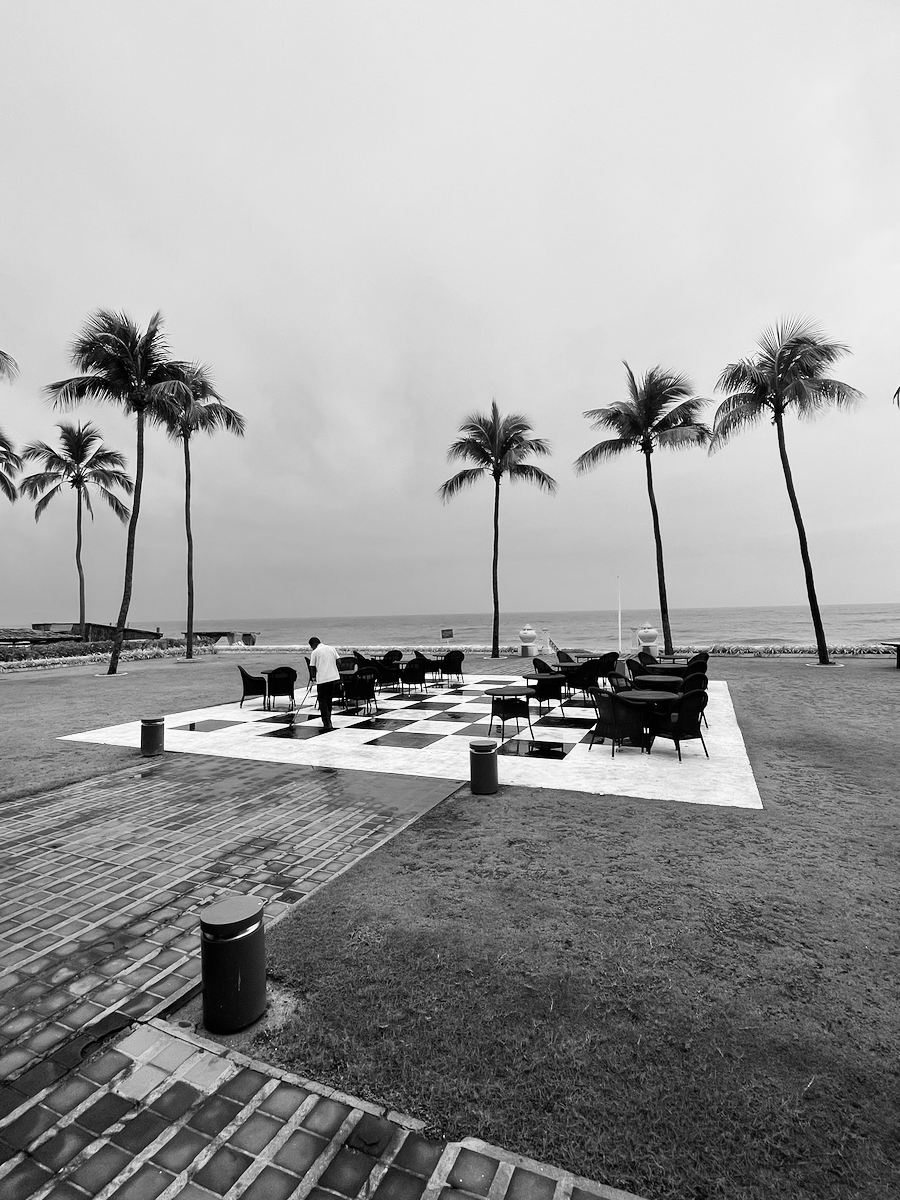
A Colombo restavamo ospiti da amici che avevamo conosciuto in Cambogia e che poi si erano trasferiti qui per lavoro. Avevamo usato la loro casa come campo base per esplorare la città. Ci lasciavamo guidare da una guida stampata su carta, la Lonely Planet. Avevo letto di questo hotel in stile coloniale e un pomeriggio siamo venuti qui per un tè su questa stessa terrazza nella quale ora siedo per scrivere questo blog. Nel mezzo del prato verde che divide la terrazza dal muretto che dà sul mare c’è una scacchiera. A misura d’uomo, una di quelle che si usano con pedine molto grandi e dove si gioca camminando sulla scacchiera stessa. Quella scacchiera disegnata sul cemento con i suoi quadretti neri e bianchi mi ha fatto ricordare che mia figlia ha camminato su questo pezzo di prato. Ricordo del tè che ci hanno portato dentro una teiera di ceramica, il latte in un piccolo bricco con la stessa ceramica. L’orizzonte e il mare. La luce forte dei tropici. La Lonely Planet sul tavolo accanto alla teiera. Si era chiusa una pagina, quella della Cambogia, e ci aspettava un anno in Finlandia durante il quale io avrei scritto la mia tesi di dottorato e nostra figlia sarebbe andata per la prima volta in un asilo finlandese. Il suo nuovo paese.
Vent’anni. È un luogo comune dire che sono volati in un attimo, ma la verità è proprio questa. Se quasi tutti viviamo il passare del tempo come un soffio veloce, è perché si tratta di un’esperienza profondamente condivisa, umana. Guardare indietro a questo arco di vita potrebbe far affiorare un po’ di malinconia: quegli anni sono andati, ormai appartengono ai ricordi.
Eppure, mentre sono qui seduto a scrivere queste righe, quello che sento dentro non è tristezza, ma una profonda gratitudine. Sono grato di essere già passato da questo hotel tanti anni fa. Sono grato di aver vissuto e di vivere dove ho vissuto e dove vivo oggi. Sono sempre stato felice? No, non sempre. Ma guardando la scacchiera e l’orizzonte, ne sono grato.
Tutto questo mi è tornato alla mente mentre facevo colazione. E il ricordo di mia figlia che camminava con il nostro aiuto su questo pezzo di erba verde perfettamente curata, questo hotel con i suoi mobili antichi, il colore della facciata che ha bisogno di qualche ritocco a causa della salsedine e dell’umidità, mi hanno ricordato che da tempo non scrivo per il mio blog.
All’improvviso mi è tornata la voglia di ritornare al mio blog e di condividere un ricordo. Eccomi qui.
Memories in Colombo
For some time now, I haven’t taken care of this blog. To be more exact, for a few years. It just stayed there, online, as if patiently waiting for my return.
I am in Colombo for work. Four days with one of the teams I work with to discuss how our project is going. We are staying at the Galle Face Hotel, right by the sea. A humid heat is brought in by the ocean waves that crash incessantly against the rocks on the shore.
Yesterday morning I was at the restaurant, sitting on the terrace for breakfast, and as I looked at the sea beyond the little garden that divides the terrace, I remembered that I had already been here.
Twenty years ago, we were returning from Cambodia after finishing our four years of work in Kampong Thom. With us was our daughter, our firstborn, who was a year and a half old at the time. It was December, and we had decided to make a stopover in Sri Lanka on our way back to Finland.
In Colombo, we stayed with friends we had met in Cambodia who had later moved here for work. We used their home as a base camp to explore the city. We let ourselves be guided by a printed guidebook, the Lonely Planet. I had read about this colonial-style hotel, and one afternoon we came here for tea on this very same terrace where I am sitting now to write this blog. In the middle of the green lawn that separates the terrace from the low wall facing the sea, there is a chessboard. Life-sized, one of those used with very large pieces where you play by walking right onto the board itself. That chessboard painted on the concrete, with its black and white squares, made me remember that my daughter once walked on this patch of grass. I remember the tea they brought us in a ceramic teapot, the milk in a small matching ceramic pitcher. The horizon and the sea. The strong tropical light. The Lonely Planet on the table next to the teapot.
A page had turned, the Cambodia chapter, and a year in Finland awaited us, during which I would write my doctoral thesis and our daughter would go to a Finnish kindergarten for the first time. Her new country.
Twenty years. It’s a cliché to say they flew by in a flash, but that is the exact truth. If almost all of us experience the passing of time as a swift breeze, it is because it is a deeply shared, human experience. Looking back at this span of life might bring up a bit of melancholy: those years are gone, they belong to memories now.
Yet, as I sit here writing these lines, what I feel inside is not sadness, but a profound gratitude. I am grateful to have already passed through this hotel so many years ago. I am grateful to have lived and to live where I have lived and where I live today. Have I always been happy? No, not always. But looking at the chessboard and the horizon, I am grateful for it.
All of this came back to my mind while I was having breakfast. And the memory of my daughter walking with our help on this patch of perfectly manicured green grass—this hotel with its antique furniture, the color of the facade in need of a few touch-ups due to the sea salt and humidity—reminded me that I haven’t written for my blog in a long time.
Suddenly, the desire to return to my blog and share a memory came back to me. So, here I am.