[As usual the English version is at the end of this post]
Ho visitato Trieste lo scorso luglio per un paio di giorni. Era da tanto che volevo andarci. Per qualche motivo mi ha sempre affascinato. Quando vivevo a Cremona mi è sempre sembrata una città lontana, di confine, difficile da raggiungere. Ovviamente non lo è e penso che a volte ci siano motivi inconsci che ci portano a vedere le distanze più dilatate di quanto lo siano.
Una breve premessa. Questo blog è parte del mio modo di digerire i contenuti del corso su Warm Data con Nora Bateson al quale ho partecipato all’inizio di agosto. Come ho scritto in un altro blog sono tornato a casa con una manciata di concetti che mi girano ancora in testa: il doppio vincolo (double bind), l’informazione come “differenza che fa la differenza”, la distinzione tra cambiare una struttura e cambiare un sistema, e altri ancora. Non ho risposte definitive e non pretendo di aver capito tutto. Ho scoperto però che scrivere dei post come questo mi aiuta a legare quelle idee a momenti che ho vissuto — come una giornata di luglio a Trieste e un pranzo in un’osteria sociale un po’ fuori mano — e quindi a capire meglio. Questo post è quindi un ‘esercizio di collegamento’, non una spiegazione.
Dunque. Lo scorso luglio ero a Trieste. Mi muovevo in città con l’aiuto di un paio di articoli del Guardian che consigliavano alcuni locali e vinerie più o meno conosciuti. Quindi seguivo una mappa gastronomica per orientarmi in città.
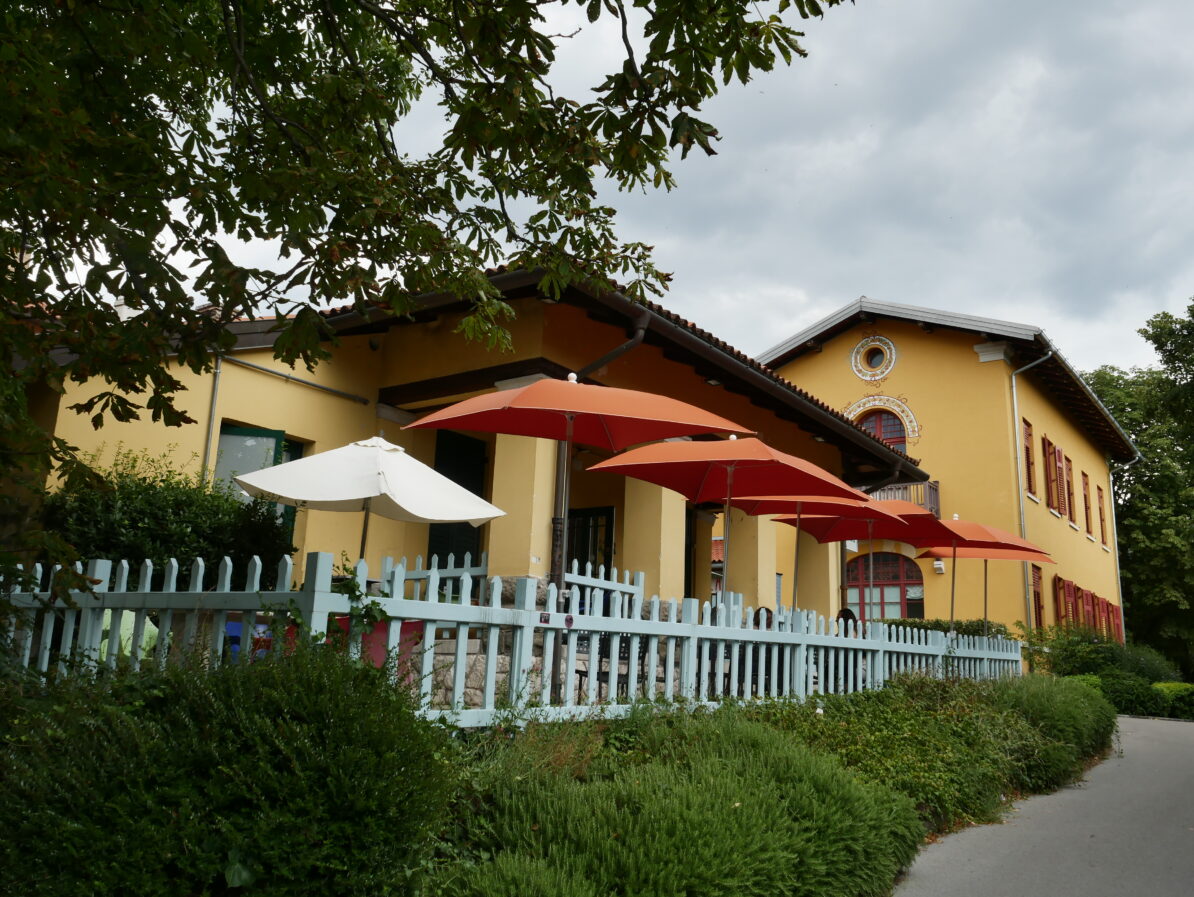
È in uno di questi articoli che ho letto dell’osteria sociale Il Posto delle Fragole. L’articolo lo descriveva come uno dei simboli di libertà di Trieste. Un bar ristorante e centro culturale dentro il parco dell’ex ospedale psichiatrico, sulle colline sopra la città. Quella parola, libertà, mi ha colpito, oltre che al nome e il ricordo del film di Ingmar Bergman. Ricordo la foto che accompagnava l’articolo: un locale piccolo, i muri di un colore giallo ocra, una piccola staccionata di legno, tavoli all’aperto e l’atmosfera di una sera d’estate. L’articolo suggeriva di prendere l’autobus per raggiungerlo, dato che si trova sulle colline dietro Trieste, oltre l’università.
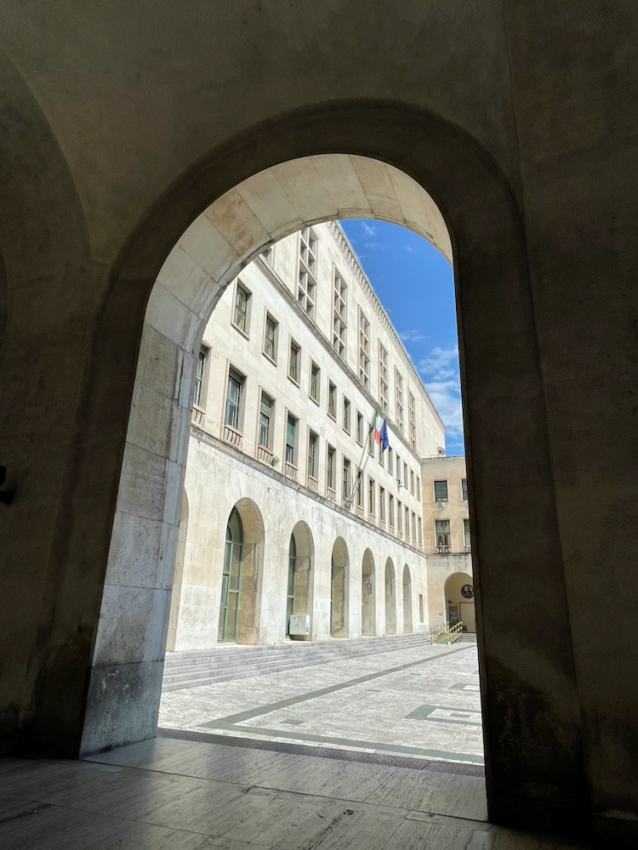
L’autobus dal centro si è arrampicato tra condomini anni ’70. È passato davanti all’università, un edificio massiccio di epoca fascista che domina con lo sguardo tutta la città fino al mare. Poi i condomini sono finiti, lasciando il posto a casette unifamiliari, a pini marittimi, al verde delle colline.
Sono arrivato alla mia fermata e per un attimo mi sono pentito: mi sono sentito lontano dalla città e ho pensato che da lì sicuramente passasse solo un bus ogni mezz’ora o quaranta minuti. Era quasi l’ora di pranzo e faceva molto caldo. Le cicale erano assordanti e non c’era segno del locale. Vedevo solo una specie di arco d’ingresso al parco con un cartello: Parco di San Giovanni.
Ho controllato su Google Maps, ma non riuscivo a capire se Il Posto delle Fragole fosse a pochi passi o distante. Comunque, la direzione giusta era in discesa. Ho seguito un sentiero che attraversava un giardino di rose molto colorate, come se fossero indifferenti al calore intenso e secco del primo pomeriggio. Sono passato di fronte al Museo Nazionale dell’Antartide, che sembrava fuori posto dato il caldo e la stagione.
Dopo pochi minuti ho raggiunto Il Posto delle Fragole. Appena sono entrato mi sono sentito subito a mio agio. Le grandi finestre aperte sul porticato, l’aria calda dell’esterno che scivolava sui tavoli, il bancone del bar dietro al quale quattro o cinque ragazzi e ragazze si davano un gran da fare. L’ora del pranzo anche per chi lavora negli edifici del parco. Il soffitto alto, con travi a vista, e i tavoli in legno chiaro. Il coperto semplice: un sottopiatto di carta, un cestino di pane, le posate, e un menù con quattro o cinque piatti del giorno.
Mi sono guardato attorno. Gli altri avventori erano una tavolata con otto o nove persone, sembravano colleghi, un uomo anziano che pranzava con una ragazza con le braccia completamente tatuate, e un tavolo con tre muratori.
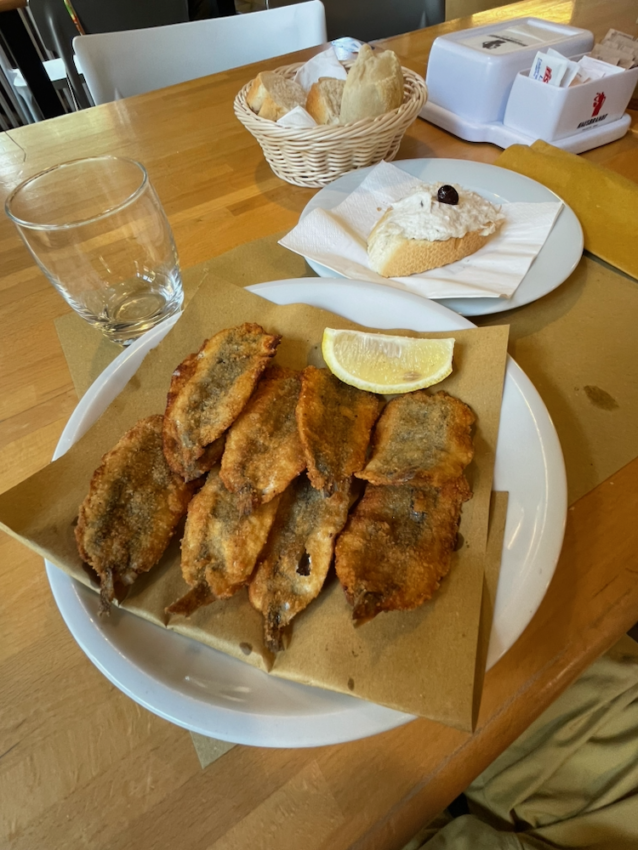
Dopo aver ordinato delle alici impanate (buonissime!) e una tartina di pesce ho pensato che ero proprio contento di essere venuto fin lassù.
La scoperta del luogo con Franco Basaglia
Mentre raggiungevo il ristorante avevo notato dei cartelli che indicavano la direzione degli edifici sparsi nel verde, con nomi di servizi e dipartimenti che non mi dicevano molto; uno indicava il servizio per i disturbi del comportamento alimentare. Poi, proprio vicino all’ingresso, prima del giardino di rose, avevo notato una targa che menzionava Edoardo Weiss, lo psichiatra che era stato allievo di Sigmund Freud e che aveva legato il suo nome alla storia della salute mentale in città.
Ho aperto Wikipedia sul telefono per saperne di più. Ero quindi nel Parco di San Giovanni, l’ex ospedale psichiatrico che oggi ospita centri per la salute mentale e dipartimenti universitari. Questo comprensorio è stato inaugurato nel 1908 sotto l’Impero Austro-Ungarico ed è il luogo in cui è nata la rivoluzione della salute mentale moderna.
Nel 1971 arrivò a dirigere la struttura Franco Basaglia, chiamato dal Presidente della Provincia Michele Zanetti. Basaglia veniva dall’esperienza dell’ospedale di Gorizia, dove dagli anni ’60 aveva iniziato a sperimentare le sue prime idee di apertura dei manicomi (come venivano chiamati allora), ma è qui a Trieste che il suo lavoro ha trovato la svolta definitiva.
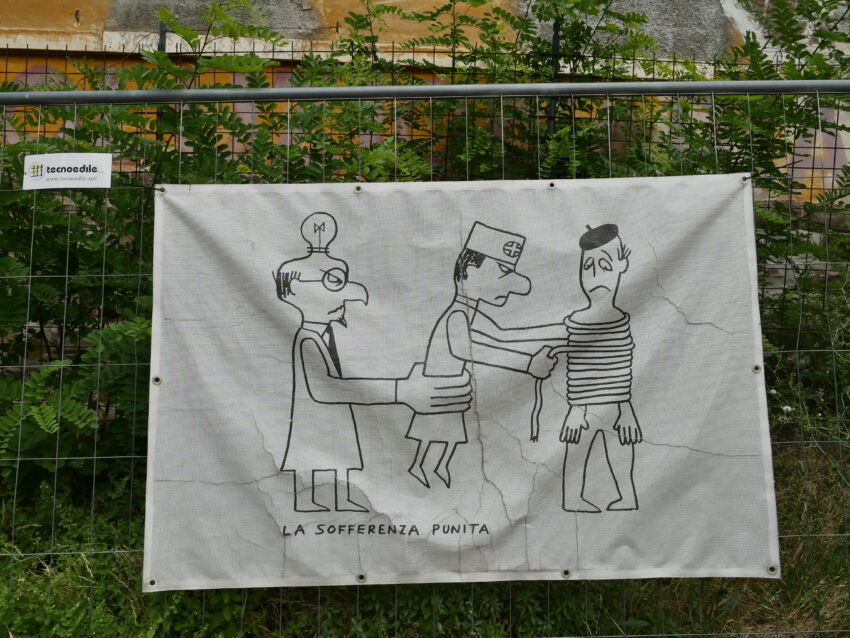
I manicomi erano istituzioni chiuse, essenzialmente luoghi di reclusione dove le persone venivano spogliate dei propri diritti e della propria identità. Basaglia arrivò a Trieste non per rendere la prigione più umana, ma per smantellarla.
Più leggevo e più sono rimasto colpito dalla semplicità di alcuni dei cambiamenti che proprio per questo erano cambiamenti radicali e carichi di umanità. Per esempio:
- Abolì le divise grigie e anonime dell’ospedale. I pazienti poterono tornare a indossare i propri abiti civili e a prendersi cura della propria immagine.
- Aprì i reparti, eliminò le sbarre alle finestre e diede ai pazienti le chiavi delle proprie stanze e dei propri armadietti, restituendo il diritto alla riservatezza e alla libertà di andare e venire.
- Mise fine alla contenzione fisica (camicie di forza, cinghie ai letti) e all’uso punitivo dell’isolamento.
- Sostenne la nascita, nel 1972, della Cooperativa Lavoratori Uniti — la prima cooperativa sociale in Italia — per trasformare il lavoro all’interno dell’ospedale, fino ad allora una forma di terapia-lavoro non retribuita, in veri contratti regolarmente pagati.
- Introdusse assemblee regolari in cui degenti, infermieri, medici e volontari discutevano insieme la vita dell’ospedale. Chi per decenni era stato soltanto oggetto di decisioni tornava a prendere la parola.
Tutto questo portò poi alla celebre Legge Basaglia del 1978 (la Legge 180), la riforma che ordinò la chiusura definitiva dei manicomi in Italia. Quando fu approvata avevo undici anni. Ne ho un ricordo un po’ sfuocato ma ricordo di avere letto molti anni che negli anni ’70 medici, sociologi e politici da tutta Europa si recavano a Trieste per osservare quello che Basaglia e i suoi collaboratori stavano sperimentando — proprio nel luogo in cui mi trovavo a pranzo. Qui non stavano semplicemente rimodellando un ospedale: stavano cambiando l’intero sistema della salute mentale.
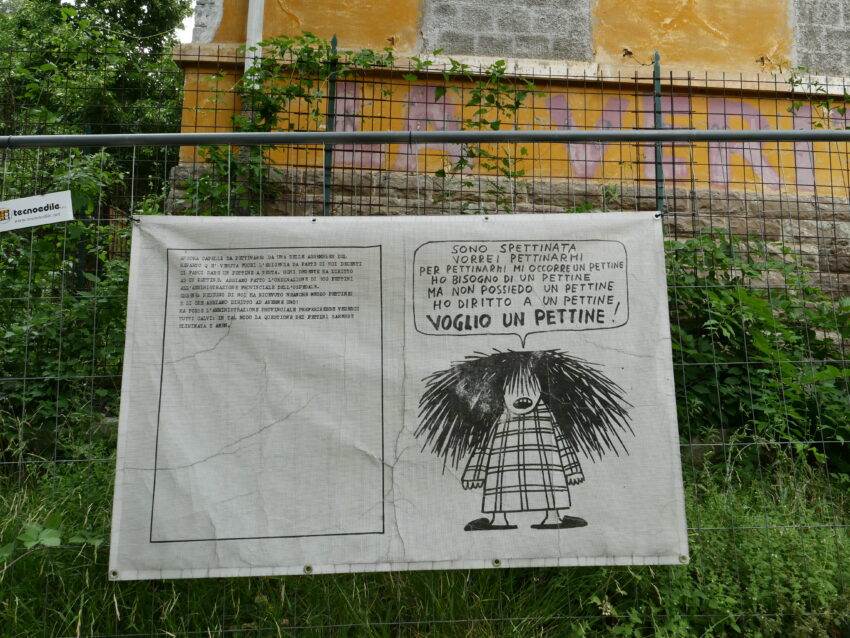
La cooperativa sociale Il Posto delle Fragole fa parte di questo processo di cambiamento di sistema. Nasce nel settembre del 1979 per iniziativa di un gruppo di operatori e volontari del team di Basaglia. Il nome è un omaggio al film di Ingmar Bergman. Chiamare così un locale dentro un ex manicomio è come dire che il Parco di San Giovanni non è più un luogo nel quale le persone venivano tenute, è invece un posto in cui le persone vengono perché vogliono venirci.
Seduto a quel tavolo, con il piatto di pesce davanti e l’aria d’estate che entrava dalla finestra, mi sono sentito al centro di un luogo importante dal quale è partito un grande cambiamento.
Cambiare la struttura, cambiare il sistema
Che cosa c’entra tutto questo con quello che ho imparato al corso di Nuuksio? Sul momento, a quel tavolo, niente. Il collegamento è arrivato ora, mentre scrivo questo post. Mi sembra di riuscire a collegare alcune di quelle idee al lavoro di Franco Basaglia.
Una di queste idee è quella del ‘doppio vincolo’ (o double bind). Per Gregory Bateson il doppio vincolo fa parte della comunicazione tra persone e si manifesta come una trappola relazionale in cui una persona riceve due messaggi che si contraddicono e allo stesso tempo non le è concesso far notare la contraddizione. Quando ci si trova in un doppio vincolo non c’è via d’uscita. Applicarlo a quello che ha fatto Basaglia a Trieste è un mio piccolo esperimento e mi posso ovviamente sbagliare.
Chi veniva rinchiuso in manicomio a lungo si trovava senza via d’uscita. Se protestava, la protesta era un sintomo. Se invece si adattava diventava il paziente obbediente, senza iniziativa, incapace di badare a sé stesso fuori da lì — e questa era la prova che non poteva uscire. Basaglia lo chiamava istituzionalizzazione: l’appiattimento prodotto dall’istituzione stessa.
Ed è per questo che migliorare il manicomio dall’interno — cibo migliore, pareti ridipinte, un posto un po’ più vivibile — non cambiava la sostanza. La sua natura di prigione restava intatta. Basaglia ha cambiato il sistema perché ha introdotto un punto di vista diverso, un nuovo contesto che ha rotto i doppi vincoli che il manicomio produceva nei pazienti. Ha restituito i vestiti ai pazienti, ha dato loro le chiavi per uscire e tornare, ha dato loro dei contratti di lavoro. Per Bateson l’informazione è una differenza che fa la differenza. E quello che Basaglia ha immesso nel sistema erano proprio differenze: i propri abiti al posto della divisa, una chiave in tasca al posto di una porta chiusa, un contratto di lavoro al posto di una terapia non retribuita. Differenze che hanno cambiato il significato del sistema stesso.
Un sistema sano è un sistema che cresce in complessità: sempre più relazioni, più diversità, più energia, informazione e apprendimento. Il vecchio manicomio era l’opposto: un sistema rigido che tendeva a rendere tutto omogeneo per controllare i pazienti. Oggi nello stesso spazio ci sono un museo dell’Antartide, cliniche, dipartimenti universitari, una radio sociale, un’osteria. Contesti, relazioni, complessità. Immagino sia questo, un sistema in salute.
Sono di nuovo a quel tavolo. L’aria d’estate. Un turista in mezzo a studenti, medici, dipendenti e lavoratori lì per il pranzo.
Vista da qui, a cinquant’anni di distanza e con Wikipedia aperta sul telefono, quello che ha fatto Basaglia sembra quasi scontato. Il senno di poi aiuta a costruire una storia e a dare un significato quasi lineare al cambiamento. Ma da dentro un sistema, mentre il cambiamento è in corso e non si hanno certezze, come lo si percepisce? Come si fa a sapere se ci si sta muovendo nella direzione giusta? Probabilmente non è possibile saperlo. Bisogna avere fiducia in quello che si fa e seguire l’istinto dettato dall’esperienza, e prendersi dei rischi.
Changing the structure, changing the system: a lunch in Trieste with Franco Basaglia
I visited Trieste last July, for a couple of days. I’d wanted to go for a long time. For some reason the city had always fascinated me. When I lived in Cremona it seemed far away, a border town, hard to get to. Of course it isn’t, and I think there are sometimes unconscious reasons that make us see distances as greater than they are.
A short preamble. This post is part of how I’m digesting a Warm Data course with Nora Bateson that I took at the beginning of August. I came home with a handful of ideas still turning over in my head: the double bind, information as “a difference that makes a difference”, the distinction between changing a structure and changing a system, and others. I don’t have definitive answers and I don’t claim to have understood it all. What I have found is that writing posts like this one — tying those ideas to moments I’ve actually lived, a July day in Trieste, lunch at a social osteria slightly off the beaten track — helps me understand better. So this post is an exercise, not an explanation.
So. Last July I was in Trieste. I made my way around the city with the help of a couple of Guardian articles recommending wine bars, some well known and some less so. I was following a food map to find my bearings.
It was in one of those articles that I read about the social osteria Il Posto delle Fragole. The article described it as one of Trieste’s symbols of freedom — a bar, restaurant and cultural centre inside the park of the former psychiatric hospital, in the hills above the city. That word, freedom, stayed with me, along with the name and the memory of the Ingmar Bergman film. I remember the photograph with the article: a small place, ochre walls, a low wooden fence, tables outside, the feeling of a summer evening. The article suggested taking the bus, since it sits in the hills behind Trieste, beyond the university.
The bus climbed out of the centre through 1970s apartment blocks. It passed the university, a massive fascist-era building that looks out over the whole city and down to the sea. Then the blocks ended, giving way to single-family houses, umbrella pines, the green of the hills.
I got off at my stop and for a moment regretted it. I felt a long way from the city, and thought there was probably only one bus every thirty or forty minutes. It was nearly lunchtime and very hot. The cicadas were deafening and there was no sign of the place. All I could see was a sort of concrete arch at the entrance to a park, with a sign: Parco di San Giovanni.
I checked Google Maps but couldn’t tell whether Il Posto delle Fragole was a few steps away or much further. Either way, the right direction was downhill. I followed a path through a garden of roses in vivid colours, as if indifferent to the dry, heavy heat of early afternoon. I passed the National Antarctic Museum, which seemed out of place given the heat and the season.
A few minutes later I reached Il Posto delle Fragole. As soon as I walked in I felt at ease. Large windows open onto the portico, warm air drifting across the tables, four or five young people working hard behind the bar. Lunchtime for the people who work in the buildings around the park. A high ceiling with exposed beams, tables in pale wood. A simple setting: a paper placemat, a basket of bread, cutlery, and a menu with four or five dishes of the day.
I looked around. The other customers were a table of eight or nine who looked like colleagues, an older man having lunch with a young woman whose arms were covered in tattoos, and a table of three builders.
After ordering breaded anchovies and a fish tartine, I thought how glad I was that I’d come all the way up here.
Discovering the place, and Franco Basaglia
On my way to the restaurant I’d noticed signs pointing to buildings scattered among the trees, with the names of services and departments that meant little to me; one was for the eating disorders service. Then, near the entrance, before the rose garden, I’d noticed a plaque with the name of Edoardo Weiss, the psychiatrist who had been a pupil of Sigmund Freud and whose name is tied to the history of mental health in the city.
I opened Wikipedia on my phone to find out more. So I was in the Parco di San Giovanni, the former psychiatric hospital that today houses mental health centres and university departments. The complex opened in 1908 under the Austro-Hungarian Empire, and it is the place where the revolution in modern mental health care began.
In 1971 Franco Basaglia came to run it, called in by Michele Zanetti, the president of the province. Basaglia came from the hospital at Gorizia, where from the 1960s he had begun testing his first ideas about opening up the asylums — as they were called then — but it was here in Trieste that his work found its decisive turn.
Asylums were closed institutions, essentially places of confinement where people were stripped of their rights and their identity. Basaglia came to Trieste not to make the prison more humane, but to dismantle it.
The more I read, the more I was struck by how simple some of the changes were — and how, precisely because of that, they were radical and full of humanity. For example:
- He abolished the hospital’s grey, anonymous uniforms. Patients could go back to wearing their own clothes and taking care of how they looked.
- He opened the wards, removed the bars from the windows, and gave patients the keys to their own rooms and lockers, restoring the right to privacy and the freedom to come and go.
- He put an end to physical restraint — straitjackets, straps on beds — and to the punitive use of isolation.
- He supported the founding, in 1972, of the Cooperativa Lavoratori Uniti, the first social cooperative in Italy, turning work inside the hospital — until then a form of unpaid work-therapy — into real, properly paid contracts.
- He introduced regular assemblies where patients, nurses, doctors and volunteers discussed the life of the hospital together. People who for decades had only been the object of decisions could speak again.
All of this led to the Basaglia Law of 1978 (Law 180), the reform that ordered the definitive closure of the asylums in Italy. I was eleven when it passed. My memory of it is blurred, but I remember reading many years ago that through the 1970s doctors, sociologists and politicians came to Trieste from across Europe to see what Basaglia and his colleagues were doing — in the very place where I was now having lunch. What was happening here wasn’t the remodelling of a hospital. It was a change to the whole mental health system.
The Il Posto delle Fragole cooperative is part of that same change to the system. It was founded in September 1979 by a group of workers and volunteers from Basaglia’s team. The name is a nod to the Ingmar Bergman film. In Swedish, smultronstället — the wild strawberry patch — means a personal place where you feel at ease, and which you don’t usually tell anyone about. Giving that name to a bar inside a former asylum is a way of saying that the Parco di San Giovanni is no longer a place where people were kept. It’s a place people come to because they want to.
Sitting at that table, the fish in front of me and summer air coming through the window, I felt I was at the centre of an important place, one where a great change had started.
Changing the structure, changing the system
What does any of this have to do with what I learned on the course in Nuuksio? At the time, at that table, nothing. The connection came now, as I write this post. I think I can link some of those ideas to that lunch at Il Posto delle Fragole.
One of them is the double bind. For Gregory Bateson the double bind arises in communication between people, and takes the form of a relational trap in which someone receives two messages that contradict each other while also not being allowed to point out the contradiction. There is no way out. Applying it to what Basaglia did in Trieste is a small experiment of mine, and I may well be wrong. The logic of the asylum said to the patient:
You are here because you are ill, and this is a place of care. But in here I take away your every choice and relationship, and the longer you stay the less able you will be to live outside — so you have to stay locked up. And if you protest, the protest becomes proof of your illness, and one more reason to keep you here.
Anyone confined for a long time had no way out. If he protested, the protest was a symptom. If he adapted, he became the obedient patient, without initiative, unable to look after himself outside — and that was the proof he couldn’t leave. Basaglia called it institutionalisation: the flattening produced by the institution itself.
Which is why improving the asylum from the inside — better food, fresh paint, somewhere a little more liveable — didn’t change the substance. Its nature as a prison stayed intact. Basaglia changed the system because he introduced a different point of view, a new context that broke the double binds the asylum produced in its patients. For Bateson, information is a difference that makes a difference. And what Basaglia put into the system were precisely differences: your own clothes instead of a uniform, a key in your pocket instead of a locked door, a work contract instead of unpaid therapy. Differences that changed the meaning of the system itself.
A healthy system is one that grows in complexity: more relationships, more diversity, more energy, information and learning. The old asylum was the opposite — a rigid system that tended to make everything uniform in order to control its patients. Today, in the same space, there is an Antarctic museum, clinics, university departments, a community radio station, an osteria. Contexts, relationships, complexity. I imagine this is what a system in good health looks like.
I’m back at that table. Summer air. A tourist among students, doctors, staff and workers there for lunch.
Seen from here, fifty years later and with Wikipedia open on my phone, what Basaglia did looks almost obvious. Hindsight helps us build a story and give change an almost linear meaning. But from inside a system, while the change is under way and there are no certainties, how does it feel? How do you know whether you’re moving in the right direction? Probably you can’t know. You have to trust what you’re doing, perhaps follow the instinct that comes from experience, and take risks.