[Scorri verso il basso per la versione in italiano]
In September 1996, I left Cremona for Glasgow. I was 29 years old, a partner in an IT company called Gamm System, and I had agreed on a one-year sabbatical with my colleagues and friends to study Economic Development. The plan was simply to leave for twelve months, get my degree, and return.
Thirty years later, I am still overseas.
I have returned to Cremona at least once a year ever since, although in recent years, maybe because I am growing older, I find myself coming back a couple of times a year. It is a strange experience to return so regularly—you notice the slow, incremental changes that people living there might miss.
The social grid of the 1990s
The Cremona I left behind was defined by somewhat rigid and unwritten social codes. In the evenings at around 7 PM, people would gather downtown at the Galleria. We didn’t always buy a drink; it was more about socializing and meeting friends. From Friday to Sunday the place was really lively with people walking around, chatting, and making plans for the evening.
The town was divided by the compagnie—closed groups of friends that defined where you went, which bars you frequented downtown, and where you didn’t go. It wasn’t hostile, but the groups stuck to their specific places.
Social class mattered too. There was a fictional high class—the so-called Cremona bene that would meet in some bars which we did not go to. I didn’t belong to that world but at the same time I never liked sticking to just one compagnia.
On summer Saturday nights, I would spend time with the group of friends of the Trattoria Cerri, then cycle to the Piazza del Duomo to look for people I knew from entirely different circles. Breaking those social boundaries wasn’t common, but staying in one box didn’t seem right to me.
The empty backdrop
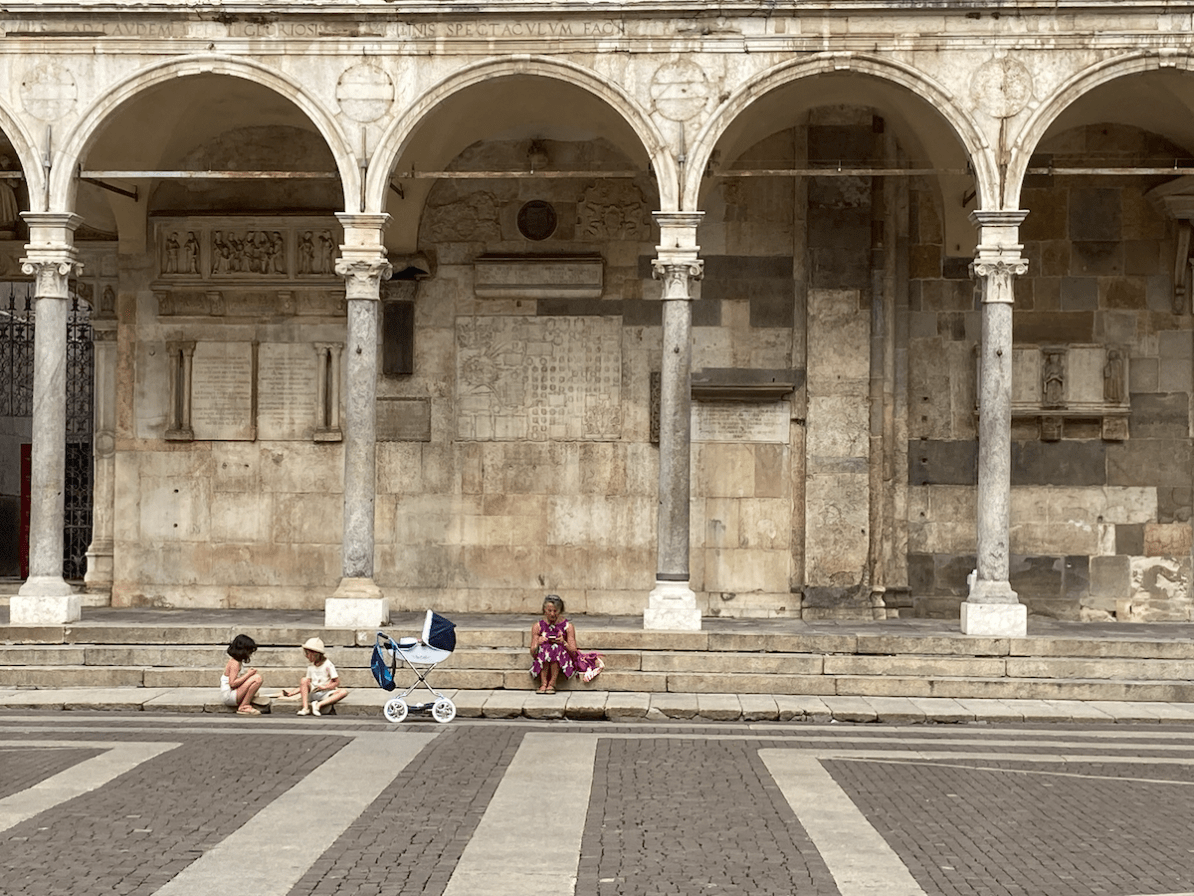
I do not know whether those old compagnie have faded today. What is really visible is that downtown feels quite empty nowadays, a somewhat soulless center where many of the family shops of my youth have closed or have Affittasi (For rent) and Vendesi (For sale) signs in the windows.
This physical emptiness of the city center is important because it doesn’t help. A hollowed-out downtown offers no real warmth or welcoming spaces. Instead, it has become the quiet stage for a different kind of social reality: a growing sense of youth disagio (distress).
But the silence in the streets isn’t just about closing shops; it is also about where we look for each other. Today, you no longer need to walk downtown to see who is out—you simply swipe through them on a screen. We are more connected globally, yet more isolated locally.
Of course, this digital bridge works differently for those of us who already share deep, established bonds. For me, technology is a gift that keeps me in touch with old friends from whom I live far away. But for a younger generation trying to build their first real communities, this purely virtual existence is a poor substitute for physical presence. The physical emptiness of the city center of town is important because it doesn’t help. A hollowed-out downtown offers no real warmth or welcoming spaces. Instead, it has become the quiet stage for a different kind of social reality: a growing sense of youth disagio (distress).
Distress vs safety
This quietness in the center has been accompanied by a sort of social disagio (distress) that for some mirrors a sense of danger when passing through the center at night.
This is perceived differently by people I spoke to during my recent visit. Some perceive the danger. Others do not draw a causal link between distress and safety. They think that Cremona isn’t an inherently dangerous city. However what is noticeable is that the perception of safety in this small and well off provincial city has shifted.
Ten years ago, you wouldn’t hesitate to walk through the center late on a weekend night. Today, people seem to pay a bit more attention. The underlying issue seems to be a distinct social distress among a specific group of younger people.
These are often youngsters who come from lower income families, may struggle or have dropped out of school and face poor job prospects. They are described to me as hanging around, hooked to social media, and having nothing to do. When you combine disillusionments with the friction amplified by social media, tempers can flare, occasionally resulting in the weekend brawls.
Band-aids and temporary fixes
To be fair, the authorities aren ‘t completely static. During my last visit, a cousin pointed out that they have been trying to organize more activities in the center of town. This summer, they brought back the Festa della Musica, turning public squares into open-air stages, alongside the weekly Giovedì d’estate which brings live music and DJ sets in local bars.
At the same time, the local papers report plans to restrict evening alcohol sales in specific downtown hotspots to curb the late-night brawls.
While the music events are positive, they feel like temporary fixes. One tries to distract the youngsters with music and by taking away their drinks. Neither address school dropout rates, family struggles, or the lack of economic opportunities. To truly change this dynamic, we need a systems-thinking approach that reimagines what our public spaces can be and who they are actually for.
A tale of two piazzas
The week before my last visit home, I was in Bologna for Il Cinema Ritrovato film festival. Bologna is much larger, wealthier, and more international, so a direct comparison isn’t fair. But one detail stuck with me.
Every night at 21:45, Piazza Maggiore was completely packed. One night they showed Orson Welles’ The Stranger(1946) in its original language with subtitles; the next, a 1927 silent Finnish movie with live avant-garde music. The crowd sat on the cathedral steps, completely engaged.
When I returned to Cremona and looked at our beautiful Piazza del Duomo, I tried to imagine a screen there showing old, subtitled films. I struggled to see it. I suspect very few people would show up, and many would complain.
But Cremona is not Bologna. You don’t get massive, diverse crowds watching black-and-white foreign films in a public square overnight. That capacity is built over time. It requires consistent, inclusive cultural programming that slowly breaks down the old compagnie mindset and invites everyone—including the youngsters who seem excluded—into the shared life of the city.
Maybe that would be a true way to revive the center, to make it more lively, and to offer options and interest to all citizens.
A system-wide alternative
If we want to move past these superficial solutions and build this kind of long-term integration, we have to look at structural root causes.
Perhaps we can draw inspiration from the international development sector. There is a proven, system-wide approach known as the Graduation approach (pioneered by the NGO BRAC in Bangladesh). The approach emerged about twenty years ago through trial and error, fine-tuning a method designed to improve the livelihoods of the country’s ultra-poor families. Instead of relying on isolated, temporary safety nets, it uses a sequenced strategy: covering basic needs first, helping start a small business activity alongside vocational training, and providing a confidence boost and psychological support through intensive, one-on-one coaching.
What if a local government like Cremona designed a localized version of this? The municipality already has various social services and youth programs in place, but they often operate in isolation and may be under-resourced.
The real difference maker in this approach is the convergence and synergies of these existing services. It requires a highly coordinated, synced system where some form of financial aid, vocational and non-vocational education, and social assistance aren’t separate departments, but a single, unified path.
Crucially, this model relies on building a relationship of support and trust with a dedicated coach or social worker who is actually available and visible in the community. By syncing local services around these trusted figures—and complementing this with open-air cultural activities in the center during the summer—the city could actively reach out to struggling, at-risk youngsters. There could be groups paired with mentors, help them develop new interests, bring meaningful life back to the center, and align their skills with actual local economic opportunities. We would be systematically helping them graduate out of distress and into active, productive participation.
Moving forward
The insularity of the 1996 compagnie seems to have evolved into a sort of cultural inertia today. We have been a provincial town looking inward for so long that it remains difficult to introduce truly transformative ideas or to utilize our public spaces creatively.
I enjoy coming back to see friends and relatives, sitting down for an aperitif, and catching up on our lives with relatives and friends. It gives me great energy. But it is difficult to ignore the quiet stagnation I have seen emerging over time.
Cremona needs to be revitalized. Of course, resources are limited, and a town of 70,000 cannot fund massive overhauls overnight. But real change requires both local authorities and civil society to have the courage to test and learn from social innovation. Entertainment during the summer is a pleasant diversion, but it is not a systemic solution. We need to deeply involve the younger generation in the creation of their own future, and realize that the mindset and habits that keep a community comfortable can also keep it stuck.
Appunti di viaggio da Cremona
Nel settembre del 1996 ho lasciato Cremona per Glasgow. Avevo 29 anni, ero socio di una società informatica chiamata Gamm System e avevo concordato un anno sabbatico con i miei colleghi e amici per studiare Sviluppo Economico. Il piano era semplice: partire per dodici mesi, prendere la specializzazione e tornare.
Trent’anni dopo, vivo ancora all’estero.
Da allora sono tornato a Cremona almeno una volta all’anno, anche se negli ultimi tempi, forse anche perché sto invecchiando, mi ritrovo a tornare un paio di volte all’anno, spinto dai legami familiari e dagli amici. È un’esperienza particolare ritornare così regolarmente: noti i cambiamenti lenti e progressivi che chi vive lì potrebbe non percepire.
Il reticolo sociale degli anni ’90
La Cremona che ho lasciato era definita da codici sociali piuttosto rigidi e non scritti. La sera, verso le 19:00, ci si ritrovava in centro alla Galleria. Non sempre si comprava da bere; si trattava piuttosto di socializzare e incontrare gli amici. Dal venerdì alla domenica il posto era davvero animato, con persone che passeggiavano, chiacchieravano e facevano programmi per la serata.
La città era divisa dalle compagnie — gruppi chiusi di amici che definivano dove andavi, quali bar frequentavi in centro e dove invece non andare. Non c’era un’ostilità aperta, ma i gruppi rimanevano fedeli ai loro spazi specifici.
Anche l’appartenenza sociale aveva il suo peso. C’era la cosiddetta Cremona bene che si incontrava in alcuni bar dove noi non andavamo. Non appartenevo a quel mondo, ma allo stesso tempo non mi è mai piaciuto limitarmi a una sola compagnia.
Nelle sere d’estate del sabato, passavo il tempo con il gruppo di amici della Trattoria Cerri, per poi andare in bici fino a Piazza del Duomo alla ricerca di persone che conoscevo in cerchie del tutto diverse. Rompere questi confini sociali non era comune, ma rimanere chiuso in un solo gruppo non faceva per me.
Il vuoto del centro
Non so se quelle vecchie compagnie siano svanite oggi. Ciò che è evidente è che il centro storico si è svuotato notevolmente. Oggi appare piuttosto deserto, un centro un po’ privo di anima dove molti dei negozi storici della mia giovinezza hanno chiuso, sostituiti dai cartelli di Affittasi e Vendesi alle vetrine.
Ma il silenzio nelle strade non riguarda solo la chiusura delle attività. Oggi non c’è più bisogno di andare in centro per vedere chi c’è in giro: basta scorrere le app del proprio cellulare. La nostra vita digitale iperconnessa ha rimosso la necessità fisica di incontrarsi di persona. Siamo più connessi a livello globale, ma più isolati a livello locale.
Naturalmente, questo ponte digitale non funziona in modo omogeneo. Per me, la tecnologia è un dono che permette di restare in contatto con i vecchi amici lontani. Ma per una generazione più giovane questa esistenza puramente virtuale è un debole sostituto della presenza fisica. Il vuoto fisico del centro città certamente non aiuta. Un centro svuotato non offre calore o spazi accoglienti. È diventato, invece, lo sfondo silenzioso di una realtà sociale diversa: un crescente senso di disagio giovanile.
Disagio e percezione di sicurezza
Questa diffusa inquietudine in centro ha portato alcuni a percepire un reale senso di insicurezza.
Si tratta di una situazione vissuta in modo molto diverso dalle persone con cui ho parlato durante la mia recente visita. Se per alcuni il pericolo è concreto, altri non vedono un legame diretto tra disagio e sicurezza personale. Pensano che Cremona non sia una città intrinsecamente pericolosa, quanto piuttosto una realtà con un problema di disagio che va affrontato in maniera seria, pur rimanendo, tutto sommato, un posto sicuro.
Detto questo, a me sembra che la percezione della sicurezza in questa piccola e benestante città di provincia sia cambiata. Dieci anni fa non avresti esitato a camminare in centro a tarda notte nel fine settimana. Oggi, le persone sembrano fare un po’ più di attenzione.
Il problema di fondo sembra essere un chiaro disagio sociale tra un gruppo specifico di giovani. Si tratta spesso di ragazzi che provengono da famiglie a basso reddito, che faticano a scuola o l’hanno abbandonata, e che affrontano scarse prospettive di lavoro. Mi sono stati descritti come giovani che passano il tempo in giro, legati ai social media e senza nulla da fare. Quando si unisce la disillusione alle tensioni amplificate dai social, gli animi possono scaldarsi, sfociando talvolta nelle risse del fine settimana riportate dalle cronache locali.
Soluzioni e risposte temporanee
A dire il vero, le autorità non sono del tutto ferme. Durante la mia ultima visita, una cugina mi ha fatto notare che il Comune sta cercando di organizzare più attività in centro. Quest’estate è stata riproposta la Festa della Musica, che ha trasformato le piazze storiche in palchi all’aperto, insieme ai settimanali Giovedì d’estate che portano musica dal vivo e DJ set nei bar del centro.
Allo some tempo, i giornali locali riportano l’intenzione di vietare la vendita di alcolici nelle ore serali in alcune zone calde del centro per frenare gli scontri notturni.
Sebbene gli eventi musicali siano un segnale positivo, secondo me — proprio come i divieti sugli alcolici — sono delle risposte temporanee. Si cerca di distrarre i giovani con la musica o di controllarli togliendo loro da bere. Nessuno dei due provvedimenti affronta l’abbandono scolastico, le difficoltà familiari o la mancanza di opportunità economiche. Per cambiare davvero questa dinamica, serve un approccio sistemico che ripensi a cosa possono essere i nostri spazi pubblici e a chi siano effettivamente destinati.
Una storia di due piazze
La settimana prima del mio ultimo viaggio a Cremona, ero a Bologna per il festival Il Cinema Ritrovato. Bologna è molto più grande, ricca e internazionale, quindi so che un confronto diretto con Cremona non è del tutto corretto. Ma un dettaglio mi è rimasto impresso.
Ogni sera alle 21:45, Piazza Maggiore era completamente gremita. La prima sera proiettavano The Stranger (1946) di Orson Welles in lingua originale con i sottotitoli; la sera successiva, un film muto finlandese del 1927 con musica d’avanguardia dal vivo. Il pubblico riempiva ogni spazio, seduto persino sui gradini della cattedrale.
Quando sono tornato a Cremona e ho guardato la nostra splendida Piazza del Duomo, ho provato a immaginare uno schermo che mostrava vecchi film sottotitolati. Ho fatto fatica a vederlo possibile. Sospetto che si presenterebbero pochissime persone, e molti si lamenterebbero dell’iniziativa.
Ma Cremona non è Bologna. Non si ottengono folle numerose e diverse che guardano film stranieri in bianco e nero in una piazza pubblica dall’oggi al domani. Questa sensibilità si costruisce nel tempo. Richiede una programmazione culturale costante e inclusiva, che scardini lentamente la vecchia mentalità e inviti tutti — compresi i ragazzi che si sentono esclusi — a partecipare alla vita condivisa della città.
Forse questo sarebbe un modo reale per far rivivere il centro, renderlo più vitale e offrire stimoli e interessi a tutti i cittadini.
Un’alternativa sistemica
Se vogliamo superare queste soluzioni superficiali, forse possiamo trarre ispirazione dal settore dello sviluppo internazionale. Esiste un approccio sistemico collaudato noto come Graduation approach (creato dall’ONG BRAC in Bangladesh). L’approccio è nato circa vent’anni fa con l’obiettivo di migliorare le condizioni di vita delle famiglie più povere del Paese. Invece di affidarsi a interventi di assistenza isolati e temporanei, utilizza una strategia sequenziale: soddisfare i bisogni primari all’inizio, aiutare ad avviare una piccola attività economica parallelamente alla formazione professionale, e offrire fiducia e sostegno psicologico attraverso un tutoraggio costante e individuale.
Cosa accadrebbe se un’amministrazione locale come quella di Cremona progettasse una versione locale di questo modello? Il comune dispone già di vari servizi sociali e programmi per i giovani, ma spesso operano in modo isolato e risentono di scarse risorse.
La vera differenza in questo approccio è data dalla convergenza e dalle sinergie dei servizi esistenti. Richiede un sistema coordinato e sincronizzato, in cui l’assistenza economica, l’istruzione professionale e non, e l’aiuto sociale non siano gestiti da dipartimenti separati, ma facciano parte di un unico percorso integrato.
Questo modello si basa soprattutto sulla costruzione di un rapporto di fiducia e sostegno con un tutor o un’assistente sociale di riferimento che sia effettivamente presente e visibile nella comunità. Sincronizzando i servizi locali attorno a queste figure di riferimento — e integrando il tutto con attività culturali all’aperto in centro durante l’estate — la città potrebbe raggiungere attivamente i giovani in difficoltà. Si potrebbero creare gruppi affiancati da mentori, aiutarli a sviluppare nuovi interessi, ridare un senso vitale al centro storico e allineare le loro competenze con le reali opportunità economiche del territorio. In questo modo, li aiuteremmo sistematicamente a superare la condizione di disagio, guidandoli verso una partecipazione attiva e produttiva.
Guardando al futuro
L’isolamento delle compagnie del 1996 sembra essersi trasformato oggi in una sorta di inerzia culturale. Siamo stati a lungo una città di provincia rivolta verso l’interno, ed è difficile introdurre idee davvero innovative o utilizzare i nostri spazi pubblici in modo creativo.
Mi piace tornare a trovare parenti e amici, sedermi per un aperitif e aggiornarci sulle nostre vite. Mi trasmette molta energia. Ma è difficile ignorare la silenziosa stagnazione che ho visto emergere nel tempo.
Cremona ha bisogno di essere rivitalizzata. Naturalmente le risorse sono limitate, e una città di 70.000 abitanti non può finanziare cambiamenti radicali da un giorno all’altro. Ma il vero cambiamento richiede sia alle autorità locali che alla società civile il coraggio di sperimentare e imparare dall’innovazione sociale. L’intrattenimento estivo è un piacevole passatempo, ma non rappresenta una soluzione di sistema. Dobbiamo coinvolgere profondamente le nuove generazioni nella costruzione del proprio futuro, e comprendere che la mentalità e le abitudini che tengono comoda una comunità possono anche tenerla bloccata.