
There is a new light




Which way? Left? Right? Straight?
I saw this sign at the end of the small platform. It speaks a language I do not understand, known only to the train staff.
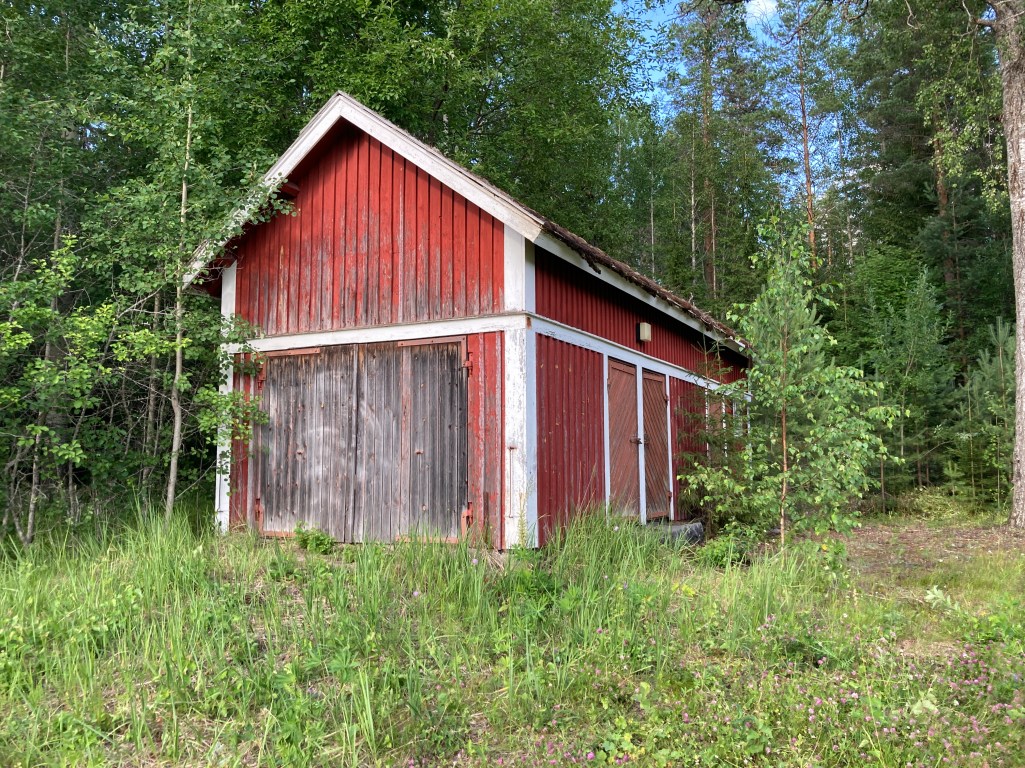
There are four passengers’ trains passing through this small rural station each day. Just two carriages linking Joensuu and Pieksämäki plus few villages in between.
Now and then a locomotive passes by on its way to pick up a train at the next station.
I have not seen yet one of those long freight trains stopping to pick up freshly cut logs. I might see one one of these days if I stay long enough. We’ll see.


I am back in Finland. I have been in Italy for three weeks. In my hometown, Cremona.
It has been the longest I have been there for many years. A question that I was asked few times has been: how is it to live in Finland?
We came back to Europe, and chose Finland, five years ago. That was June 2017. We chose Tampere over Helsinki because we lived here about 10 years earlier. It si well connected and not too far from Helsinki. It is a growing and dynamic city which is more affordable than Helsinki for the time being.
During the three weeks in Cremona I was asked about Finland. Is there darkness at this time of the year? What do you see when you travel the country? How long and cold is the winter? Is the winter time really hard? How are the people?
Hose is it to live there?

I answered these questions with brief statements about the length of the day light in June. The brief day light in November and December. The -30C I experienced this year on Christmas Day. The ice that covers the lake until March and April.
Brief answers while chatting over an aperitivo.
On the place from Milano to Helsinki I was looking down at the Alps and thought about those answers. I remembered the question Simone asked me: but how is it to live there? A question I did not answered when he asked it to me because it is not easy to answer and because it requires some more thinking than an aperitivo in a packed bar allows.
I took the photo I have posted in this blog a couple of months ago. It was a Sunday. A warm spring afternoon. I was with our dog, Dante. We took the bus towards Lempäälä. We stopped after 15 minutes near Peltolammi and took the path into the forest.
We walked for about one hour. The sun was shining. A calm breeze was moving the trees. We met only four or five other people walking in the same area.
The green. The breeze. The trees. The path which had been walked by many other people over the years. All of it so close to the city.
I was alone in this forest with Dante. I was not far from houses, but could not see any of them. The spring had brought back the leaves on to the trees and started that explosion of life and nature that takes place every year after the long winter.
So, here is one aspect of living in Finland. Being close to nature and being able to walk in a forest nearby a city after a few minutes bus rides.
This is just one angle to living here and there is is more to explore and reflect upon after the five years living here, but the weekend walks in nearby Tampere are special.

A wonderful Zen story that I re-discovered this week thanks to a friend and which gave me confort. It is from an old little book I bought in 1989 in Cremona (Italy) which was published by the Italian publisher Adelphi: 101 Storie Zen (101 Zen Stories) by Nyogen Senzaki and Paul Reps.
Shoun became a teacher of Soto Zen. When he was still a student his father passed away, leaving him to care for his old mother.
Whenever Shoun went to a meditation hall he always took his mother with him. Since she accompanied him, when he visited monasteries he could not live with the monks. So he would build a little house and care for her there. He would copy sutras, Buddhist verses and in this manner receive a few coins for food.
When Shoun bought fish for his mother, the people would scoff at him, for a monk is not supposed to eat fish. But Shoun did not mind. His mother, however, was hurt to see others laugh at her son. Finally she told Shoun: “I think I will become a nun. I can be a vegetarian too.”
She did and they studied together. Shoun was fond of music and was a master of the harp, which his mother also played. On full-moon nights they used to play together.
One night a young lady passed by their house and heard music. Deeply touched, she invited Shoun to visit her the next evening and play. He accepted the invitation. A few days later he met the young lady on the street and thanked her for her hospitality. Others laughed at him. He had visited the home of a woman of the streets.
One day Shoun left a distant temple to deliver a lecture. A few months afterwards he returned home to find his mother dead. Friends had not known where to reach him, so the funeral was then in progress.
Shoun walked up and hit the coffin with his staff. “Mother, your son has returned,” he said. “I am glad to see you have returned son,” he answered for his mother.
“I”m glad too,” Shoun responded. Then he announced to the people about him: The funeral ceremony is over. You may bury the body.”
When Shoun was old he knew his end was approaching. He asked his disciples to gather around him in the morning telling them he was going to pass on at noon. Burning incense before the picture of his mother and his old teacher, he wrote a poem:
For sixty years I lived as best I could,
Making my way in this world.
Now the rain has ended, the clouds are clearing,
The blue sky has a full moon.
His disciples gathered about him, reciting a sutra, and Shoun passed on during the invocation.